

Importing mobile phone spare parts from China can be highly profitable, but only if you avoid common mistakes related to sourcing, quality, and logistics. In this guide, we outline the top 8 mistakes wholesalers make when importing and how to avoid them.
Before we begin reviewing common mistakes, we recommend that you consult the 2026 iPhone Parts Guide to stay fully informed about future market trends.
|
📘 Summary This article explains the most common mistakes made by wholesalers when importing mobile phone parts from China to Latin American markets. It focuses on challenges such as supplier selection, quality inspection, customs clearance, shipping, inventory management, and part compatibility with mobile phones. It also offers practical solutions to minimize risks and improve profitability in the wholesale mobile phone parts business. |
🔍 Key Highlights
|
Table of contents
- What are the common mistakes in importing wholesale mobile phone spare parts?
- 1- Choosing the wrong supplier
- 2- Ignoring quality control procedures
- 3-Underestimating the importance of customs regulations and duties
- 4- Poorly planned packaging and shipping
- 5- Poor inventory and demand forecasting
- 6 - Not diversifying sources of supply
- 7- Wholesalers are not sure about the compatibility of cell phone parts
- 8- Poor marketing and not building a brand
- 8 Tips for cell phone parts wholesalers to build a successful business
- FAQs
What are the common mistakes in importing wholesale mobile phone spare parts?
When importing mobile phone parts in bulk, wholesalers and distributors make several mistakes, the most notable of which are choosing the wrong supplier, neglecting quality control, underestimating the importance of customs regulations and duties, poor planning for packaging and shipping, poor inventory and demand forecasting, relying on a single supplier instead of diversifying sources, ignoring the compatibility of parts with local phone models, and poor marketing without building a strong brand identity.
1- Choosing the wrong supplier
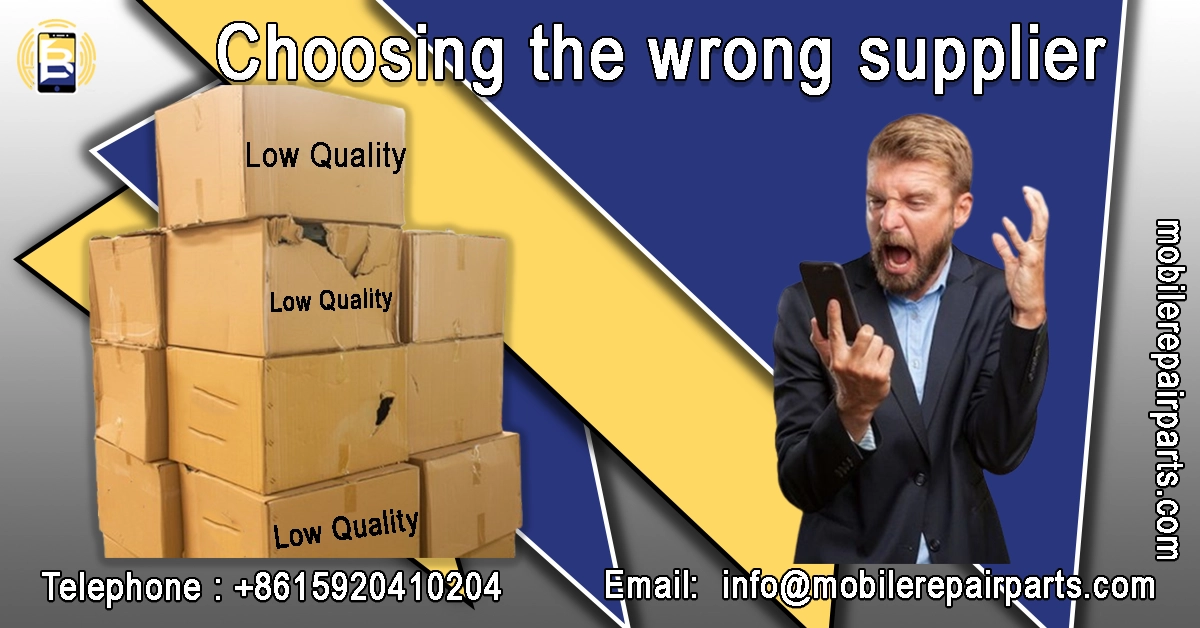
Choosing the wrong supplier is one of the most serious mistakes when importing mobile phone parts from China.
Many mobile phone spare parts wholesalers focus solely on low prices and attractive product catalogs, without adequately verifying the supplier’s reliability and the quality standards they adhere to.
Focusing solely on price leads to receiving poor-quality mobile phone spare parts, customer dissatisfaction, and financial losses.
To avoid losses in the mobile phone parts business, you should always prioritize reliable suppliers of parts for iPhone, Samsung, Xiaomi, Tecno, Huawei, and Poco. and tablet parts (iPad and Samsung tab) by verifying their qualifications, reputation, and the consistent quality of their products, rather than focusing solely on price.
How to check the reliability of phones spare parts suppliers in China?
To verify spare parts suppliers in China, check official licenses, request samples, and confirm quality through third-party inspection. Focus on long-term supplier reputation and handling of complaints. Choose specialized suppliers for better quality and compatibility, use secure payment systems like Trade Assurance, and ensure clear return and warranty policies.
- Digital Verification of Licenses: Don’t settle for copies of certificates; request the “Unified Social Credit Number” and verify that the company’s actual business activity involves the sale of spare parts through Chinese government platforms.
- Request samples across multiple categories: Order samples of varying quality levels to test credibility, and always use third-party “pre-shipment inspection” to ensure the bulk shipment matches the samples.
- Analyze reviews intelligently: Focus on the supplier’s tenure (more than 5 years), negative reviews, and how the supplier handles issues, rather than being misled by perfect star ratings that may be fake.
- Prioritize specialized suppliers: Look for suppliers specializing in mobile phone parts, not electronics parts in general; They are more knowledgeable about the complexities of software pairing for modern mobile phones and possess advanced technical solutions for repairing or transferring the serial number to avoid the annoying “Unknown Part” message on modern iPhones such as the iPhone Pro and Pro Max .
- Enable “Trade Guarantee”: Avoid direct bank transfers with new suppliers, and use the platforms’ payment systems to ensure your right to a refund in case of violations.
- Clear Return Policy: Ensure there is a written agreement outlining how factory-defective parts will be compensated; a reliable supplier has a clear system for part replacements.
Risk indicators to watch out for when importing cell phone parts
Risk indicators when importing cell phone parts include unsafe payment methods outside protected platforms, missing compliance certificates, pressure tactics to rush orders, lack of verified export history, inconsistent company information, refusal to provide real product proof, and absence of quality control reports or warranties.
- Unsecured payment methods: Refusing to use protection systems such as Alibaba Trade Assurance and insisting on direct bank transfers, cryptocurrencies, or personal accounts.
- Lack of compliance certificates: The absence of certificates such as UN38.3 for batteries or RoHS for displays, which increases the risk of the shipment being rejected at customs.
- High-pressure tactics: Using phrases like “stock is running out” or “offer ends today” to prevent you from requesting samples or verifying quality.
- Lack of a reliable export history: The absence of a clear history of international shipments or export experience indicates low reliability.
- Refusal to provide genuine proof: Failure to send a live video of the factory or actual photos of inventory, relying solely on catalogs.
- Mismatched company information
Discrepancies in the company name between invoices and popular trade platforms like Made-in-China or the official website. - Lack of quality reports: Failure to provide inspection reports or quality certificates indicates a weak or non-existent quality control system.
2- Ignoring quality control procedures
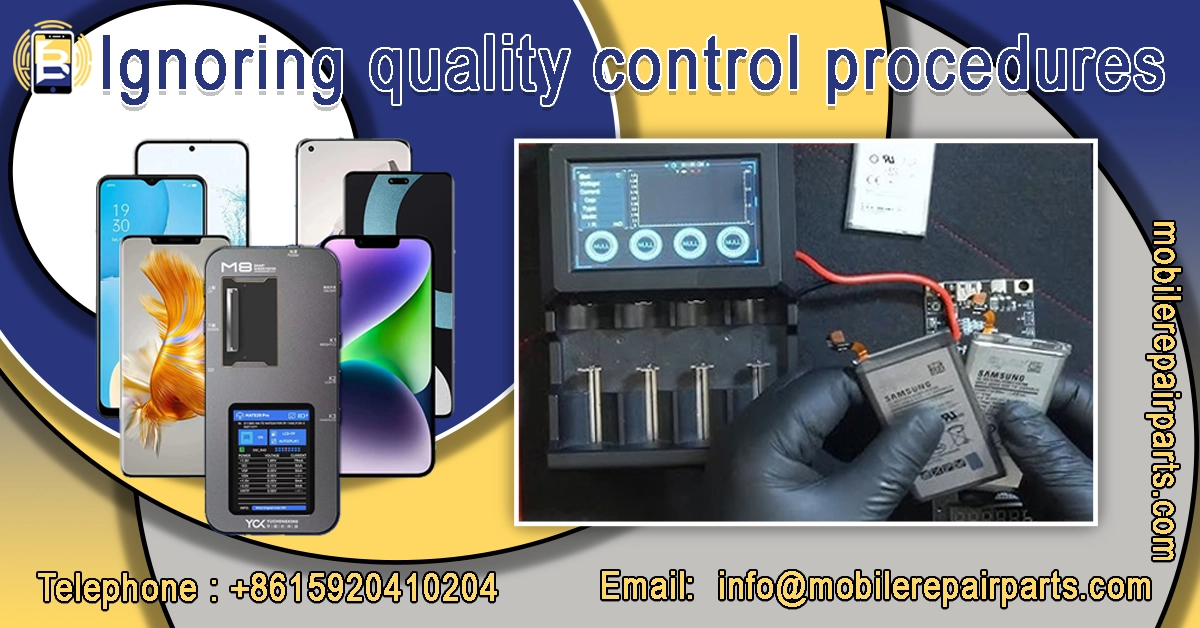
Failure to adhere to quality control procedures may result in defects in mobile phone parts, high product return rates, and a loss of customer trust.
Wholesalers should conduct rigorous testing of phone screens and batteries and verify that the parts are compatible with the phones to ensure consistent quality before purchasing in bulk.
Quality testing for cell phone parts
Quality testing is an essential step in ensuring the reliability of spare parts and tools used in mobile phone maintenance.
Testing mobile phone parts involves inspecting replacement screens to verify color accuracy and touch responsiveness. Battery capacity and charging speed must also be verified. When performing any phone repair, compatibility must be confirmed before purchasing in bulk.
Understanding different screen technologies such as OLED, In-Cell, and TFT is essential when evaluating replacement parts quality and market segmentation in mobile repair business.
For a detailed technical comparison of iPhone screen types, see: What’s the Difference Between OLED, In-Cell, and TFT iPhone Screens?.
For a deeper technical comparison between OLED screen types, you can read: Hard OLED vs Soft OLED Screens Comparison.
3-Underestimating the importance of customs regulations and duties
Ignoring customs regulations and import taxes can lead to shipment delays, fines, or even confiscation of goods.
Wholesalers must understand local laws and calculate all import costs in advance to avoid unexpected risks.

Understanding import requirements in Latin American countries
Import requirements vary by country and may include invoices, certificates, product codes, or telecom approvals.
For example, Mexico and Chile require detailed documentation, Brazil applies high duties with NCM codes, while Colombia and Peru may require telecom approvals.
Read our guide below to learn about the customs requirements in Colombia and Chile that you need to know before importing replacement cell phone parts from China. Importar repuestos de celulares desde China a Colombia y Chile.
Understanding customs regulations and calculating local taxes is key
Accurate cost planning includes customs duties, VAT, storage, and clearance fees to prevent financial losses and delays.
Working with a local customs broker helps ensure compliance and smooth shipment processing.
4- Poorly planned packaging and shipping
Poor packaging and shipping can lead to damaged mobile phone parts, delayed deliveries, and financial losses.
Wholesalers must ensure proper protection and work with reliable logistics partners to maintain cell phone parts quality during transit.
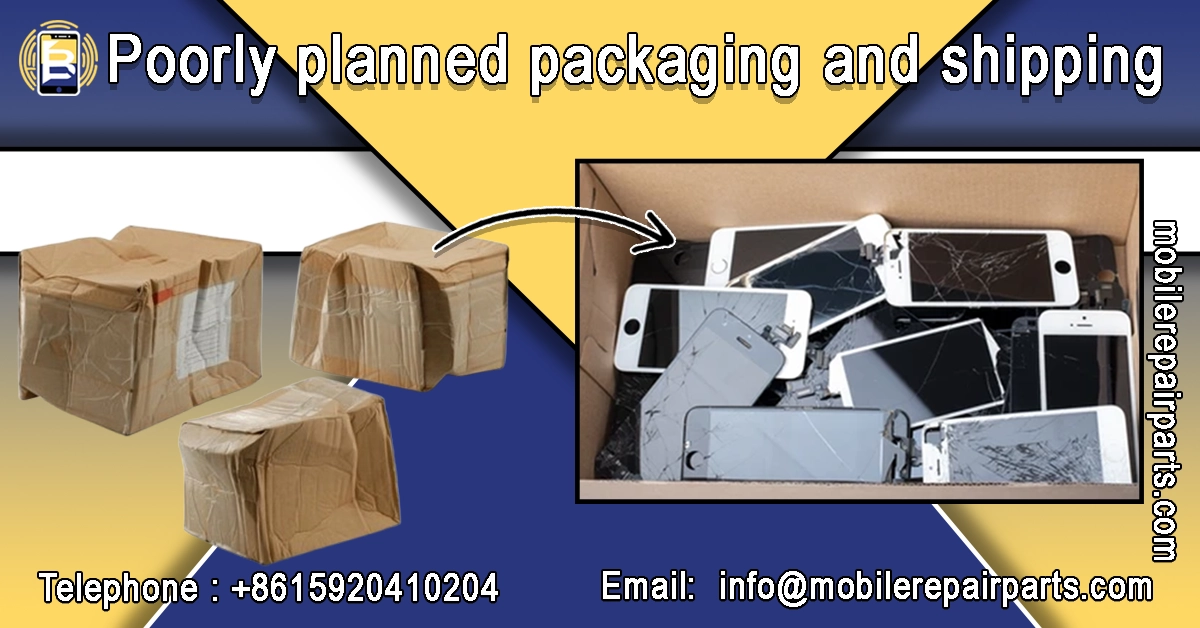
Choose reliable freight forwarders and ensure safe transportation of sensitive parts
Safe shipping requires specialized packaging, reliable freight forwarders, and proper handling of fragile electronic components.
Safe shipping involves the use of anti-static materials, protective packaging, insurance coverage, and clear labeling to prevent any damage.
- Work with freight forwarders experienced in handling electronic and fragile items.
- Use anti-static bags for circuits and cables.
- Apply foam inserts and reinforced packaging for screens and glass parts.
- Add “fragile” or “breakable” labels on all boxes.
- Consider shipping insurance for high-value or bulk orders.
5- Poor inventory and demand forecasting
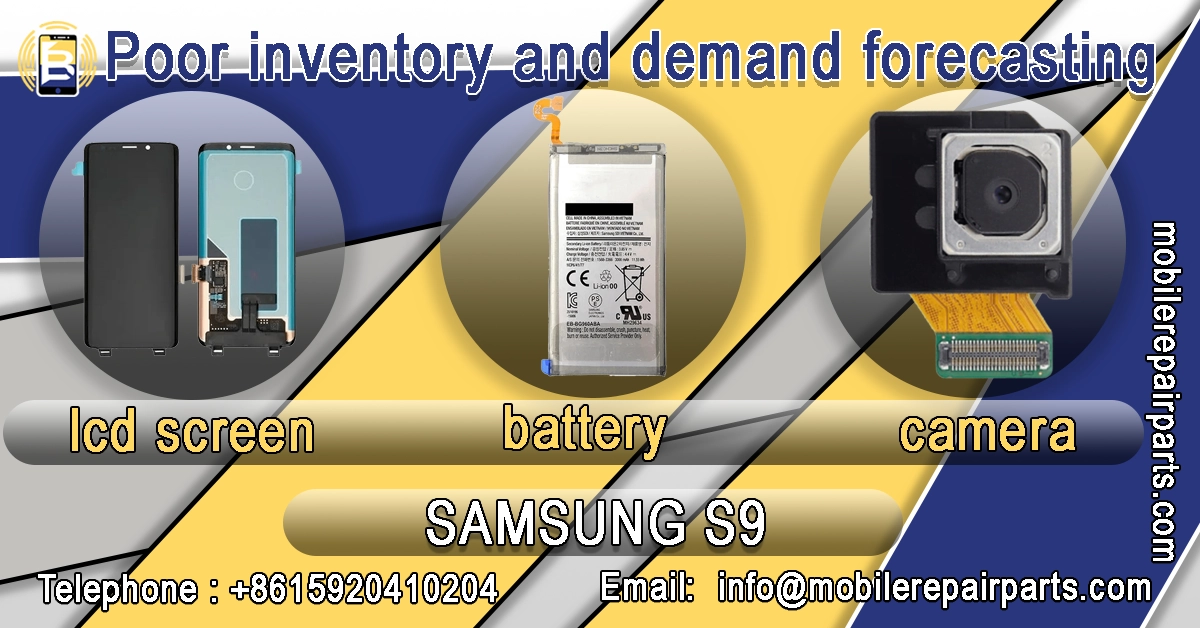
Analyze market trends in Latin America
Effective inventory management ensures that high-demand spare parts are available while minimizing excess inventory as much as possible.
Tracking best-selling mobile phones, monitoring new releases, and using reliable data sources help wholesalers forecast demand.
- Keep an eye on the most commonly used models in your country (Apple smartphones g. iPhone 11 in Colombia, Samsung Galaxy A-series in Brazil).
- Follow the release dates of new models for early planning.
- Make sure to follow trusted sites like GSMArena and Statista to stay up-to-date with the latest information and data.
Pursue effective inventory management strategies
- Adopt inventory management software such as Zoho or TradeGecko.
- Keep a larger stock of high-demand items (screens and batteries).
- Stock rare items only when there is a confirmed demand.
6 - Not diversifying sources of supply
Relying on a single supplier for mobile phone spare parts increases the risk of delays, stock shortages, and business disruption if that supplier faces financial, logistical, or platform issues.
Wholesalers reduce supply risks such as delays and shortages by working with multiple suppliers and sourcing mobile phone spare parts from different markets in China.

How do cell phone parts wholesalers avoid relying on a single supplier?
Wholesalers avoid this mistake by diversifying their supplier base and sourcing mobile phone spare parts from multiple suppliers and regions in China to reduce supply chain risks.
- Rely on at least 3 major suppliers to minimize the risk of delayed shipments.
- Research multiple markets in China such as Shenzhen and Guangzhou.
- Sign flexible contracts that allow you to adjust quantities as needed.
- Follow up on supplier evaluations periodically to ensure quality and service levels are maintained.
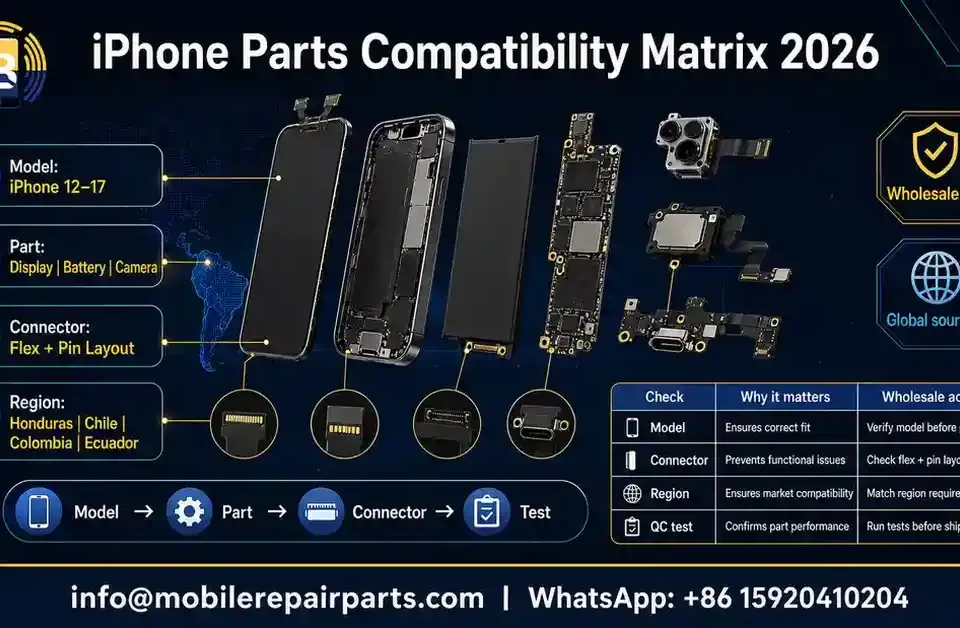
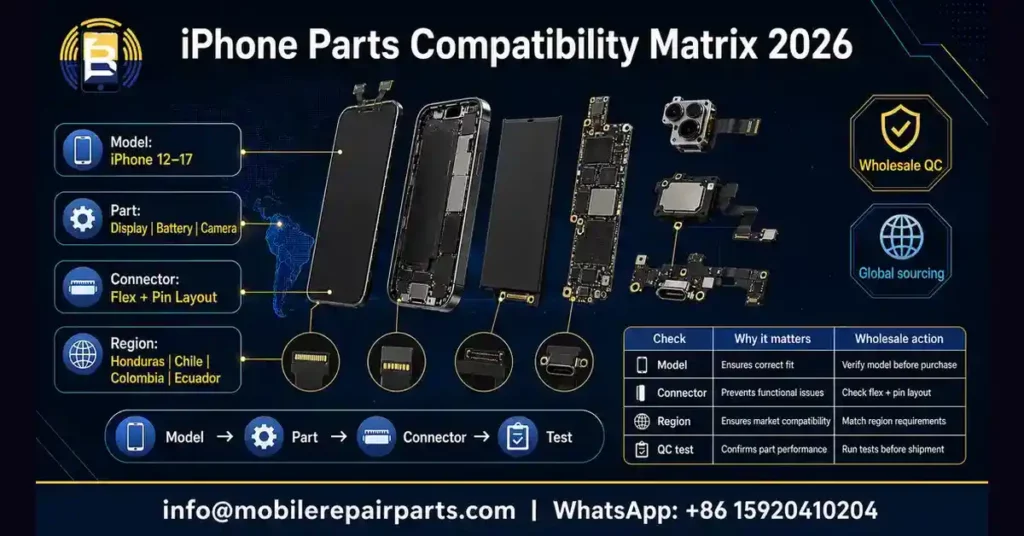
7- Wholesalers are not sure about the compatibility of cell phone parts
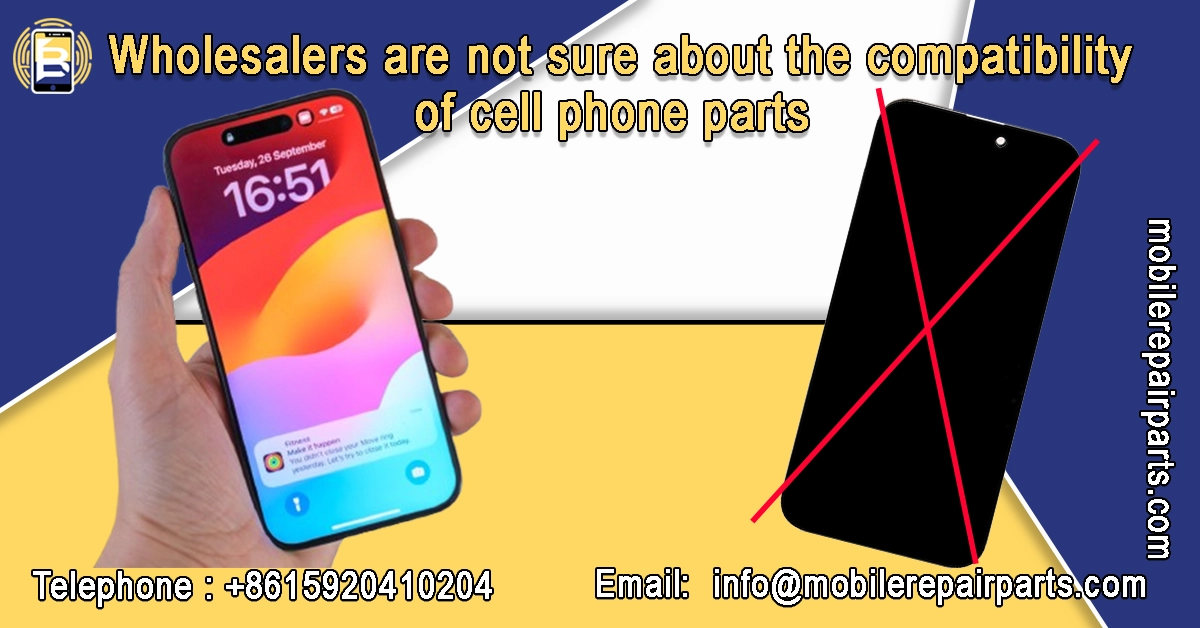
Wholesale imported cell phone parts are not compatible with phone models available in the local market, due to different versions or technical specifications.
For example, no screen or battery can be installed on modern iPhones, iPads, or Samsung cell, as these devices require fully compatible components.
How can wholesalers solve mobile phone parts compatibility issues?
Wholesalers can reduce compatibility problems by carefully verifying product details and testing small batches before bulk purchasing.
- Check the model number and part number of each spare part before ordering.
- Wholesalers request detailed photos from the supplier.
- Hire a technical expert to review the specifications.
- Start with small trial shipments to minimize risk.
8- Poor marketing and not building a brand

Some wholesalers just sell cell phone parts without any branding, which reduces trust and makes the price the only difference with competitors.
How can wholesalers market their mobile phone spare parts business and build a strong brand?
Wholesalers can build a strong brand by focusing on packaging, digital presence, customer trust, and after-sales service instead of competing only on price.
- Design your own branded packaging (Private Label Packaging).
- Print quality labels with your logo on cell phone parts.
- Create a professional online shop that documents your expertise and provides clear information.
- Use social media accounts to spread educational content and build credibility.
- Promote fast day delivery for high-demand items.
- Offer clear warranties and easy returns.
At BETA Electronic Co LTD, we are a specialized supplier of wholesale certified mobile phone parts.
With years of experience importing directly from China to Latin America, we help wholesalers source high-quality components for brands like iPhone, Samsung, and Xiaomi. Our team supports you every step of the way - from checking the quality of cell phone parts to safe packaging and shipping - so you can achieve success in the industry with confidence and efficiency. Contact us now and get the best spare parts at competitive prices.
8 Tips for cell phone parts wholesalers to build a successful business
Successful wholesalers rely on trusted suppliers, strict quality control, proper logistics planning, market data analysis, supplier diversification, compatibility verification, and strong branding with clear warranties to build trust and long-term growth.
- Deal with reliable suppliers and build strong relationships with them.
- Always check the quality before shipping.
- Understand local laws and tax charges.
- Plan your packaging and shipping professionally.
- Use real-time data to anticipate demand and make smarter purchasing decisions. For example, you can explore how AI technologies are changing the supply chain and the future of repairable phones to better understand market trends, Tecnología y future: El impacto de la inteligencia artificial en el negocio de los recambios de telefonía móvil.
-
Don't rely on just one supplier, strategically diversify your suppliers and create a network of backup suppliers in different cities in China.
- Before confirming any order, ask the supplier for clear pictures of the cell phone spare parts with the model number and serial number of each spare part, and review them with a specialized technician to avoid buying parts that are not compatible with your country's phone versions.
- Don't just offer cell phone spare parts at low prices, focus on developing a visual identity for your brand (logos, special packaging), and provide a clear written guarantee to make your customers trust you and prefer you over competitors.
FAQs
In conclusion, the Latin American mobile phone spare parts market is rapidly developing, and importing them from China gives you excellent profit opportunities. But your success depends on avoiding common mistakes and making smart and thoughtful decisions.
By choosing reliable suppliers, implementing quality control, understanding local regulations, carefully planning shipping, and effectively managing inventory, you'll be able to build a stable and profitable business.
Are you ready to start your import business?
Contact us on WhatsApp today and start importing cell phone parts successfully.