

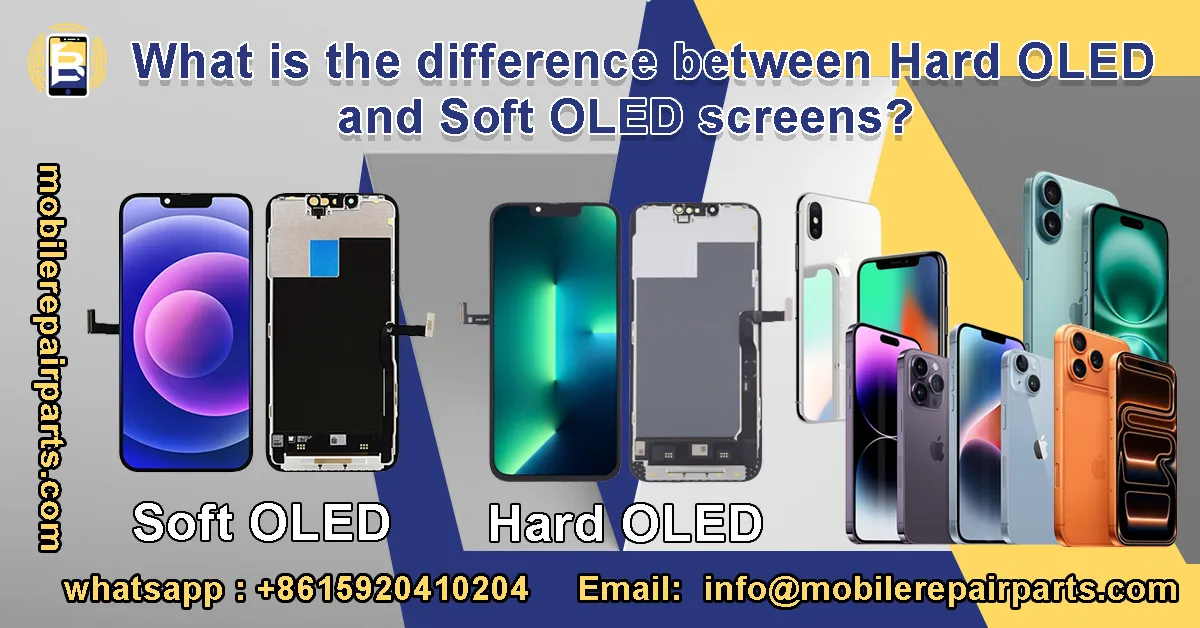
The comparison between Hard OLED and Soft OLED screens is not a technical one; rather, it is a decision regarding profits in the iPhone parts market.
One option reduces costs but increases risk, while the other maintains quality and reduces return rates.
Based on our experience at BETA Electronic Co LTD, which spans more than 15 years, this difference directly impacts your profit margins and your business reputation in the market if you’re in the repair or wholesale business for mobile phone parts in Latin America.
For a complete overview of the mobile phone parts market, including iPhone components, pricing, and sourcing strategies, check out our full guide: iPhone Spare Parts 2026 Guide.
Table of Contents
What are OLED Screens?
OLED (Organic Light-Emitting Diode) screens are an advanced display technology featuring self-illuminating pixels, which provide vivid colors and high contrast. In terms of physical structure, these displays are divided into two main types: Hard OLED and Soft OLED screens. The fundamental difference between them lies in the base material on which the pixels are built.
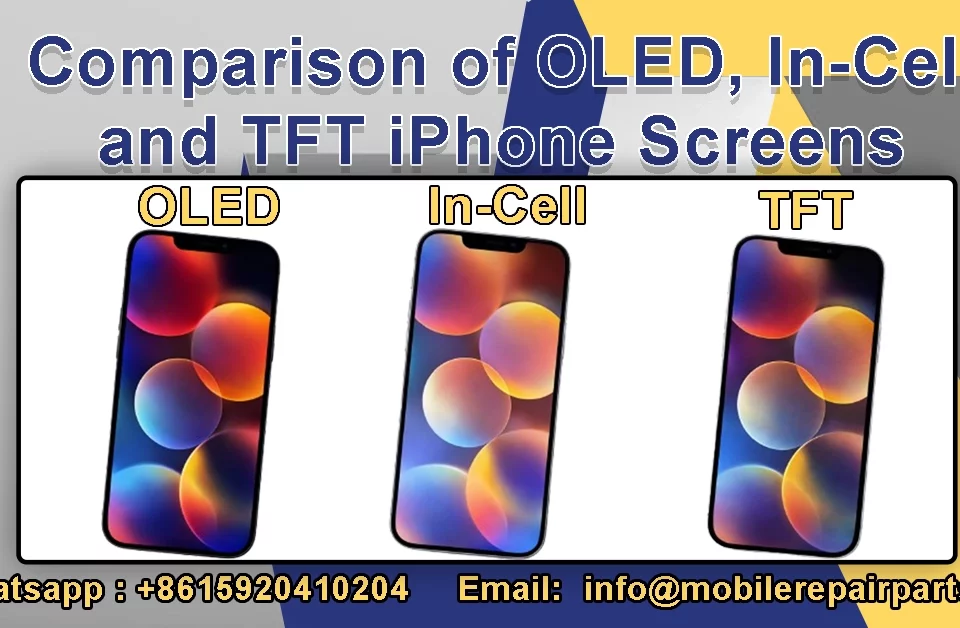
For a deeper technical breakdown of how these compare to other technologies like InCell and TFT, you can refer to our detailed analysis in Spanish: Diferencia entre pantallas OLED, InCell y TFT.
What are Hard OLED screens?
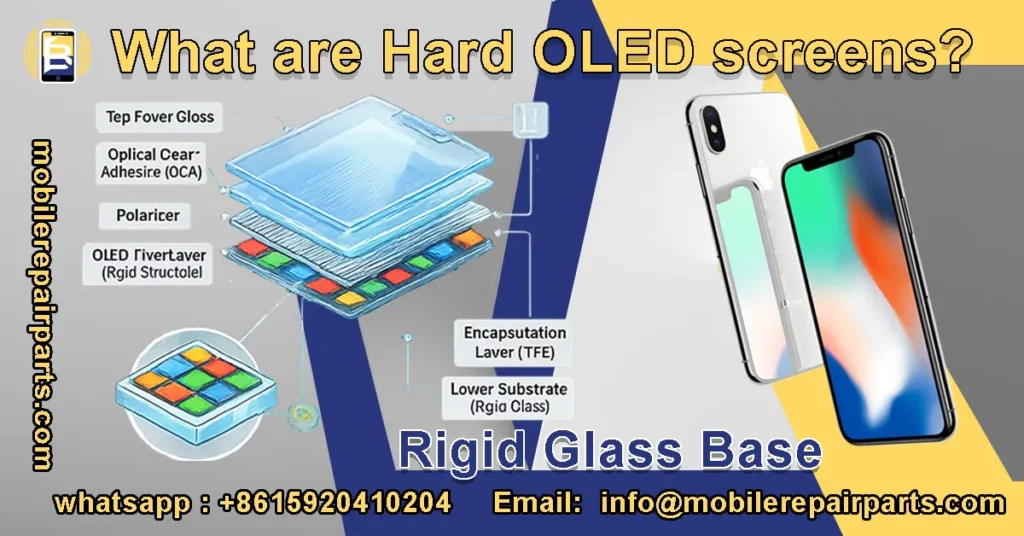
Hard OLED screens are a type of OLED screen used in smartphones, where the panel is manufactured on a rigid glass substrate rather than a flexible plastic substrate. They use self-emissive OLED pixels, so they offer strong contrast and deep blacks, but their rigid structure makes them less forgiving during installation and more prone to cracking when pressed. Hard OLED screens are used as a cost-effective option for iPhone screen replacements.
Features of the Hard OLED screen
Hard OLED screens offer good image quality, including high contrast and vivid colors, thanks to their self-illuminating pixels. They are also cost-effective and widely available on the market, making them a suitable choice for smartphone repairs.
- They offer vivid colors, good brightness, and excellent color contrast (true black) thanks to OLED technology.
- They are cheaper to produce and replace compared to Soft OLED screens.
- They use a rigid glass substrate instead of flexible plastic, making them less prone to warping but more prone to breaking upon strong impact compared to the flexible type.
- They consume less power compared to traditional LCD screens.
Disadvantages of a Hard OLED screen
Hard OLED screens lack durability and feature wide bezels due to the hard glass layer covering them; they are less flexible, slightly thicker, and may consume more power compared to Soft OLED screens.
- They are extremely fragile and prone to displaying colored lines or complete failure when dropped or subjected to pressure.
- They are less flexible than Soft OLED screens, making them unsuitable for curved or foldable phones.
- They may be thicker and heavier compared to Soft OLED screens.
- They consume more battery power compared to Soft OLED screens.
What are Soft OLED Screens?
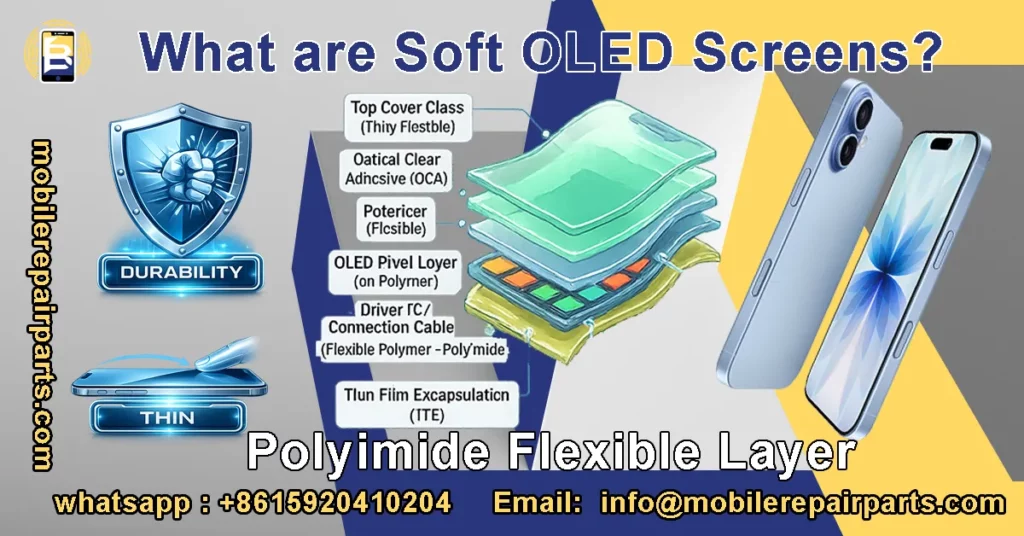
Soft OLED screens are high-quality, flexible screens made from a plastic substrate (polyamide) instead of rigid glass. These displays are known for their exceptional durability and impact resistance, their superior color reproduction, and their thinner, sleeker design. These screens are frequently used in modern iPhones , particularly the iPhone Pro.
Features of the Soft OLED screen
Soft OLED screens offer high-quality performance with enhanced flexibility, durability, and efficiency, making them ideal for modern smartphones.
- They deliver vibrant colors, deep blacks, and excellent contrast thanks to self-illuminating pixels.
- Flexible and lightweight, they are typically thinner than other technologies.
- More durable and shock-resistant compared to rigid OLED displays.
- They also offer superior brightness, color accuracy, and better contrast ratios, comparable to native displays.
- It features faster pixel response times, which reduces ghosting in videos and provides smoother scrolling.
- It operates without a backlight, which reduces power consumption and helps extend battery life.
Disadvantages of a Soft OLED screen
The drawbacks of Soft OLED displays include their higher cost compared to Hard OLED screens and their increased susceptibility to potential image burn-in issues due to their thermal insulation properties.
- Their production and replacement costs are higher than those of Hard OLED displays.
- They are also still susceptible to “image burn-in” when displaying static content for extended periods.
- They may be sensitive to scratches or pressure despite their flexibility.
- Repairing them is more complicated than with Hard OLEDs, and they are not as widely available as cheaper alternatives.
What is the difference between Hard OLED and Soft OLED screens?
Hard OLED screens use a rigid glass base, making them cheaper but more fragile, while Soft OLED screens use a flexible plastic base, offering better durability, thinner design, and higher overall performance at a higher cost.
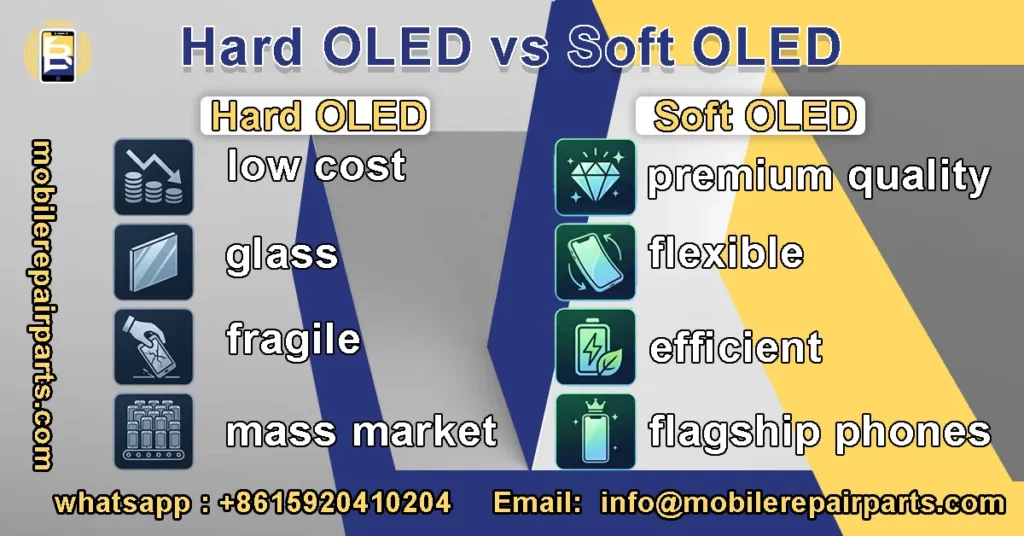
This table provides a professional comparison between Hard OLED and Soft OLED screens in terms of cost, performance, and market positioning.
| Aspect | Hard OLED | Soft OLED |
|---|---|---|
| Base Material | Rigid glass substrate | Flexible plastic substrate (polyimide) |
| Wholesale Cost | Relatively lower cost | Higher cost due to manufacturing quality |
| Replacement Cost | Affordable and widely available | Higher cost with relatively lower availability |
| Thickness | Thicker | Thinner and lighter |
| Display Quality | Good OLED display quality | Higher quality, closer to original displays |
| Brightness | Good brightness level | Higher brightness with better stability |
| Color Accuracy | Good | Higher accuracy, closer to original calibration |
| Power Consumption | Relatively higher power consumption | Better energy efficiency |
| Burn-in Risk | Naturally present in OLED panels | Also present and depends on usage |
| Installation Risk | Requires more care during installation, For complex models like the 13 Pro Max, refer to our iPhone 13 Pro Max screen replacement guide for a safe repair. | Relatively easier to handle |
| Return Rate | May be higher depending on usage and installation quality | Usually lower due to better build quality |
| Repair Difficulty | Relatively easier | More technically complex in some cases |
| Availability | Widely available in the market | Less widely available |
| Target Market | Budget repairs and cost-sensitive customers | High-quality repairs and customers seeking original-like performance |
| Profit Strategy | Good profit margins with volume-based sales | Lower margin per unit, with higher selling price reflecting product quality |
Which Screen is Better for Wholesalers?
The best approach for wholesalers is to stock both Hard OLED and Soft OLED screens to serve different market segments. Soft OLED targets premium customers, while Hard OLED fits budget-focused, high-volume sales. This dual strategy allows flexible pricing and maximizes customer reach without losing either quality- or price-sensitive buyers.
Why are Soft OLED screens more expensive?
Because their manufacturing process is more complex and typically involves higher-quality materials. This added complexity in manufacturing is reflected in higher wholesale prices, but it also offers advantages in terms of clarity, texture, and durability.
Phone Compatibility with Replacement Screens and Use in the Latin American Market
The choice between Hard OLED and Soft OLED screens depends on the Apple iPhone model; Hard OLEDs are often used in budget repairs for cell phones such as the iPhone X, iPhone 11, iPhone 11 Pro Max, and iPhone 12, while flexible OLEDs are preferred for newer and high-end models such as the iPhone 16e, iPhone 16 Pro, and iPhone 17 Pro Max.
Discover our advanced solutions through our iPhone 17 screen replacement services.
Wholesale import of Hard OLED and Soft OLED screens from China to Latin America
Wholesalers should focus on striking a smart balance between Hard OLED screens, which are aimed at markets with limited budgets, and Soft OLED screens, which are designed for high-end, premium smartphones. It is also advisable to work with reliable suppliers who offer screens tested to strict quality standards before making bulk purchases, such as BETA Electronic Co LTD, which has over 15 years of experience supplying mobile phone parts and repair tools from China to Latin America and around the world, offering competitive prices and reliable quality in the repair and trade market.
Explore our wholesale iPhone 17 Pro screen guide to refine your purchasing strategy. We also support classic models with specialized parts like the iPhone SE 2016 screen to keep your customers’ devices fully functional.
FAQ about Hard OLED and Soft OLED screens
Which OLED type is closer to original Apple display quality?
Soft OLED screens are much closer to original Apple display performance in color accuracy and brightness.
Is the installation process for Soft OLED screens different from that for Hard OLED screens?
Soft OLED screens are more flexible and easier to install within the iPhone’s narrow bezels, while Hard OLED screens require precise pressure and extreme caution to avoid breaking them during installation.
How can you spot a counterfeit OLED screen at a wholesale market?
A counterfeit OLED screen can be identified by poor color quality and brightness, as well as the absence of true black. It may also drain the battery more quickly and exhibit touchscreen issues or lines after installation, indicating poor manufacturing quality. Therefore, we always recommend purchasing from trusted suppliers.
Which is better for long-term durability: Hard OLED and Soft OLED screens?
Soft OLED screens are considered the best in terms of long-term durability, thanks to their flexible polyimide structure, which absorbs shocks and withstands pressure better than rigid glass screens. Hard OLED screens, on the other hand, are more prone to breaking or developing color lines when subjected to impact due to their rigid glass base.
The success of your business depends on understanding the technical and market differences between Hard OLED and Soft OLED screens. Whether you’re importing large quantities from China or looking for reliable replacement parts for your repair shop, BETA Electronic Co Ltd. is your go-to source for high-quality mobile phone replacement parts at competitive prices.
Contact us today to get the best offers and discounts.