

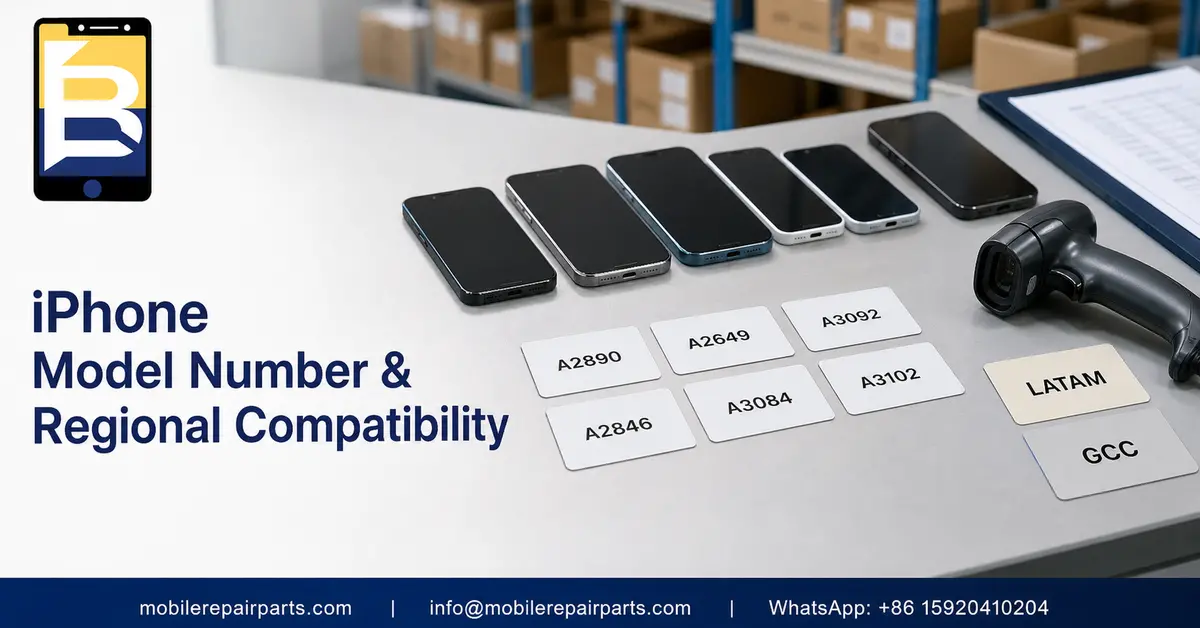
A buyer can order the right device family and still receive stock that needs a closer regional check. An iPhone’s Axxxx model number can help identify the device, while the purchase region can matter when you review its SIM arrangement. For a wholesaler, the practical question is not simply “Which iPhone is this?” but “What has been verified before this part is bought, labelled, or shipped?”
📘 Summary
Use the A-model number as an identification input, then verify the purchase region, SIM arrangement, physical fitment, supplier SKU, and functional test before accepting stock.
🔍 Key Highlights
- Do not treat an Axxxx number as universal part or carrier clearance.
- Record destination and purchase region separately for LATAM and Gulf orders.
- Keep inspection, SKU matching, and functional testing as separate approvals.
Contents
Why regional identification belongs in a wholesale check
Apple lists iPhone model numbers by device and, for some entries, by country or region group. Apple also documents SIM arrangements that can differ by generation and purchase region. That makes model identification and SIM review useful control points before stock is accepted.
The direct answer is simple: record the exact Axxxx number, verify the Apple-listed model and relevant SIM arrangement, then keep part fitment as its own verification decision. Do not substitute the marketing part number, serial number, IMEI, or family name for the Axxxx model number.
Find the model number before you quote or receive
On the device, open Settings, select General, then About. Apple says you can tap the part number beside Model to reveal the model number. Compare that number with Apple’s iPhone model-identification list; record both the number and the Apple-listed model or region group that applies.
This identification step does not validate a replacement part. It is the starting record for the rest of the receiving or repair-control workflow.
The following Short is an optional visual walkthrough of replacement-screen inspection. It covers display checks, touch response, and standard screen-testing steps after installation. It is not a model-number identification guide. Use Apple’s documentation as the verification source for the iPhone model number and SIM arrangement.
Five steps to check regional compatibility before stocking parts
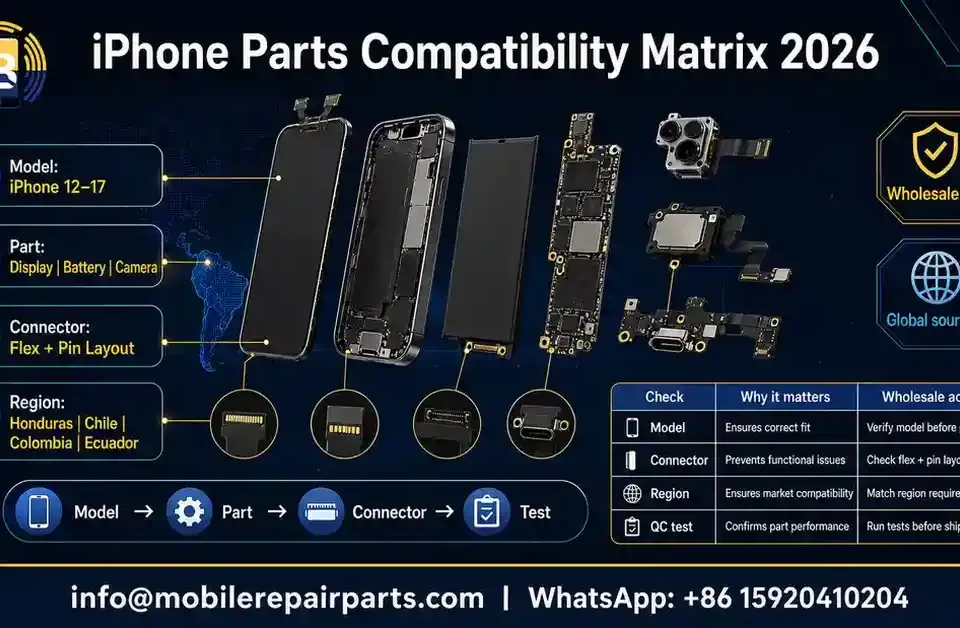
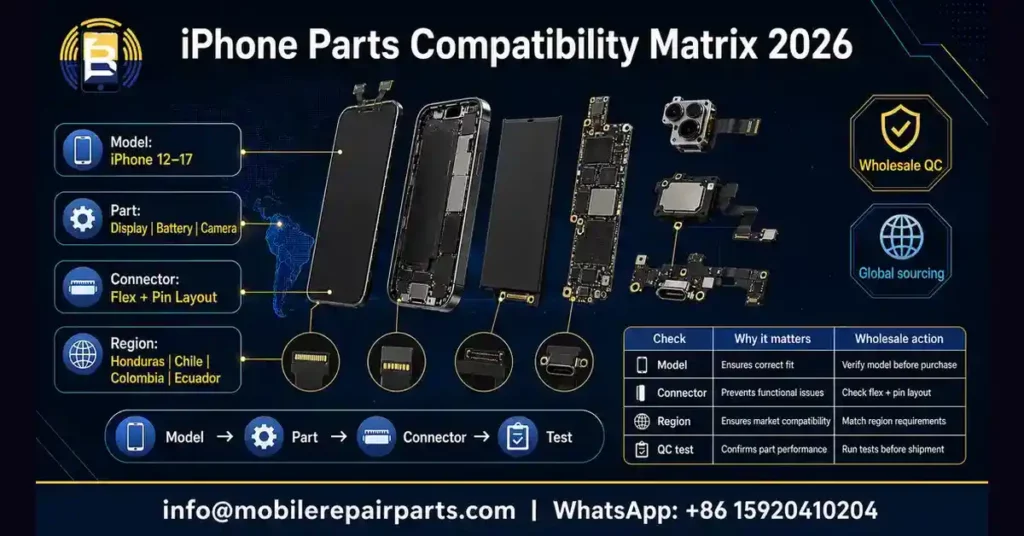
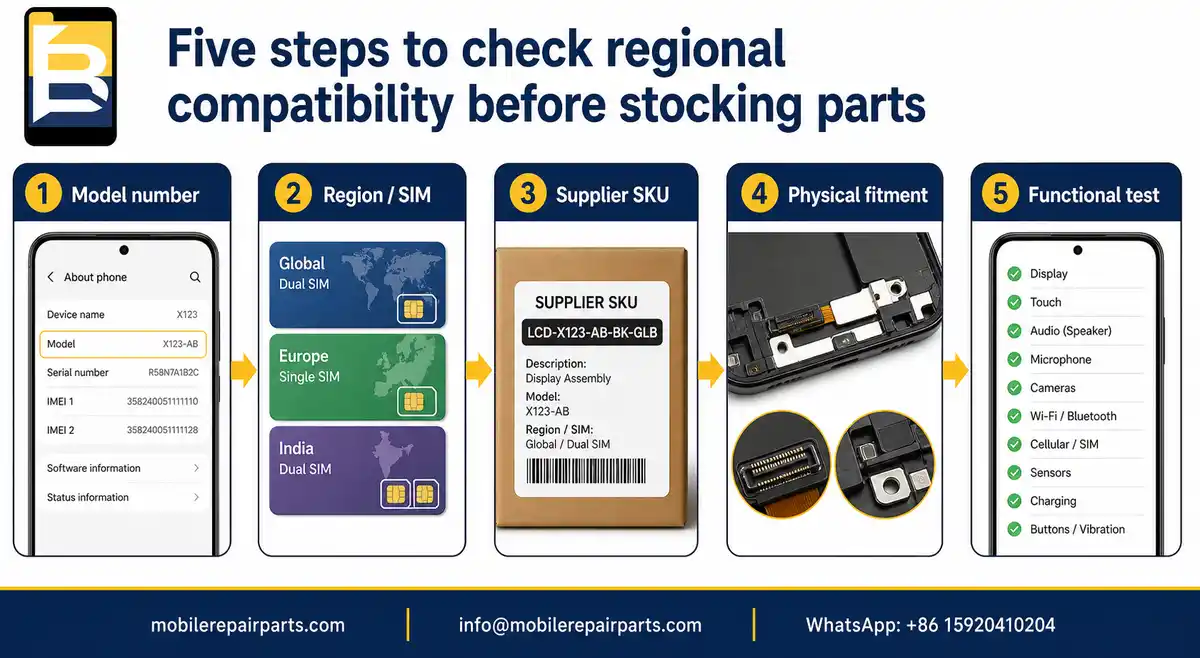
Use five separate controls before accepting stock
- Record the device identifier. Capture the
Axxxxmodel number and compare it with Apple’s model-identification list. - Confirm the SIM arrangement. Check Apple’s SIM-type list for that generation and purchase region.
- Inspect the actual device. Examine the device and intended repair area rather than relying on the device name alone.
- Match the exact supplier SKU. Match the supplier’s stated part SKU to the verified device and part configuration.
- Test before acceptance. Install and perform an appropriate functional test before treating the part as accepted stock or a completed repair.
This is an inventory and repair-control procedure. It does not establish that all replacement parts, radio bands, carrier features, or device functions are interchangeable.
For broader product-category context, see the iPhone spare-parts guide for wholesalers.
Regional decision table for mobile buyers
| Market or origin | What to record first | SIM check | Parts decision |
|---|---|---|---|
| United States | Axxxx number, generation, and purchase-region record | Check Apple’s generation-specific list; do not infer the arrangement from the market name. | Inspect the device and match the exact supplier SKU before approval. |
| China mainland | Axxxx number and Apple-listed region group | Apple specifies eSIM support only for certain models; verify the applicable generation and purchase region. | Keep SIM configuration and physical inspection as separate checks. |
| Hong Kong / Macao | Axxxx number, generation, and purchase-region record | Apple lists two nano-SIM cards for certain models; verify the exact applicable model. | Confirm the actual device and supplier SKU, not the market label alone. |
| Latin America | Axxxx number, destination country, and supplier SKU | Use Apple’s list for the exact generation and purchase region; do not treat Latin America as one configuration. | Inspect, SKU-match, and function-test before stock acceptance. |
| Gulf markets | Axxxx number, destination country, and supplier SKU | Use Apple’s list for the exact generation and purchase region; do not treat Gulf markets as one configuration. | Inspect, SKU-match, and function-test before stock acceptance. |
Parts-risk mapping: what the A-model number does not settle
| Part area | Control needed after model identification |
|---|---|
| SIM trays | Confirm the applicable SIM arrangement, then inspect the physical device and match the supplier’s exact SKU. |
| Charging assemblies | Inspect the intended repair area and match the verified device configuration to the supplier’s exact SKU. |
| Housings | Inspect the actual device and intended repair area; do not approve from the A-model number alone. |
| Flex cables | Use physical inspection and the supplier’s exact SKU as separate controls. |
| Displays | Inspect the device, match the supplier SKU, and perform an appropriate functional test. |
| Cameras | Inspect the device, match the supplier SKU, and perform an appropriate functional test. |
Two regional receiving examples
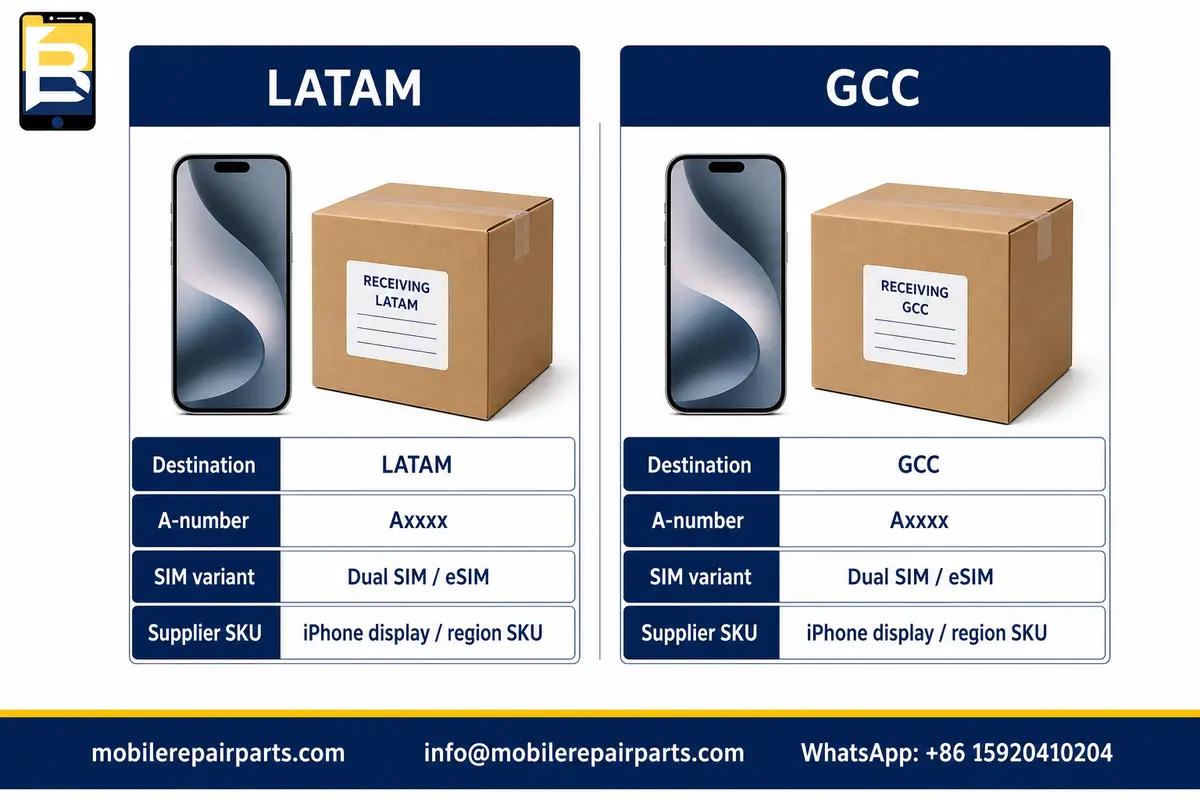
Latin America: separate the destination from the device record
A distributor preparing stock for a Latin American destination records the device’s Axxxx number, checks Apple’s listing, and reviews the specific generation and purchase region in Apple’s SIM documentation. The buyer then inspects the device, matches the supplier’s exact SKU, and function-tests the installed part. The destination label is useful for the order record, but it does not replace those checks.
For related battery-planning context, review the iOS 18 battery compatibility guide for Latin American wholesalers, the iPhone 11 battery bulk guide, and the iPhone 15 Plus battery wholesale guide.
Gulf markets: keep country, purchase region, and SKU distinct
For a Gulf-market shipment, the receiving record should preserve the destination country, the device’s Axxxx number, the Apple-listed identification result, the SIM check for the relevant generation and purchase region, and the supplier SKU. The team then completes physical inspection and an appropriate functional test. This avoids turning a broad regional label into an unsupported compatibility conclusion.
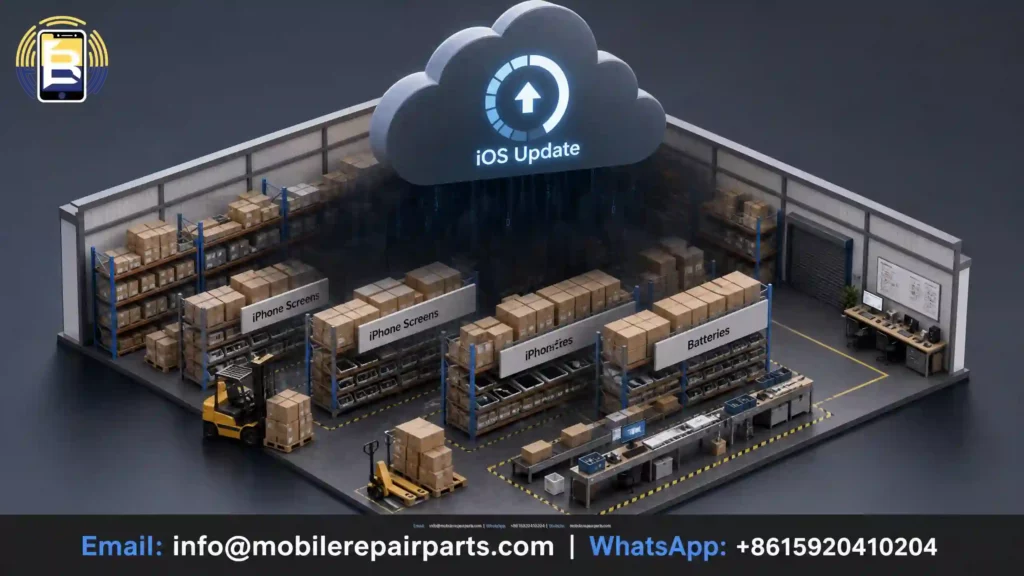
Software context can also be tracked separately from model identification. See how iOS updates can affect iPhone replacement-parts compatibility for a related operational review.
Stock labels and receiving checklist
- Device model name and exact
Axxxxnumber - Apple model-list result and recorded purchase region where applicable
- Destination country and order reference
- SIM arrangement checked against Apple’s generation-specific documentation
- Supplier’s exact part SKU and intended repair area
- Physical-inspection result
- Functional-test result, date, and checker
- Any exception that requires a separate buyer or technician review
A clear label makes the record reviewable at receiving, picking, and repair stages. It does not convert a model number into universal part or radio-band clearance.
Frequently asked questions
Is the A-model number enough to approve an iPhone replacement part?
No. It identifies the iPhone model when checked against Apple’s list, but it does not provide universal part, radio-band, carrier-feature, or repair-outcome clearance. Inspect the device, match the supplier’s exact SKU, and perform an appropriate functional test.
How do I find an iPhone’s A-model number?
On the iPhone, open Settings, select General, then About. Tap the part number beside Model to reveal the model number, then compare it with Apple’s iPhone model-identification list.
Should I assume every iPhone from China mainland, Hong Kong, or Macao has the same SIM configuration?
No. Apple documents generation- and region-specific SIM arrangements. For applicable models, Apple specifies eSIM support in China mainland only for certain models, and lists two nano-SIM cards for certain models in Hong Kong and Macao. Verify the exact model, generation, and purchase region.
What should a wholesale receiving label include?
Include the Axxxx number, Apple identification result, purchase-region record where applicable, destination country, SIM check, supplier SKU, inspection result, and functional-test record. Keep exceptions visible for a separate review.
Make the model number a control point, not a shortcut
Before your next iPhone parts order or shipment, add the five-step check to the receiving workflow. Record the model number, verify the relevant Apple information, and keep physical inspection, supplier SKU matching, and functional testing as separate approvals.