
BETA Electronic Co LTD

BETA Electronic Co LTD

BETA Electronic Co LTD


Smartphone repair shops across Latin America are seeing profit margins increase by up to 35% when specializing in premium device components. The charging board remains one of the most frequently replaced parts in modern iPhones.

Understanding the iPhone 17 Pro Max charging board specifications and repair techniques is crucial for your business success. This component represents both a technical challenge and a significant revenue opportunity for repair technicians throughout the region.

TL;DR Quick Summary

📘 Summary

The iPhone 17 Pro Max charging board represents a lucrative opportunity for Latin American repair shops, offering up to 35% profit margins. With significant technical advancements including 140W USB-C PD 3.1 and improved thermal management, mastering these repairs positions your business as a premium service provider. The article provides comprehensive technical specifications, diagnostic protocols, and repair solutions to help you capitalize on this high-demand component.

🔍 Key Highlights

  • New single-layer PCB design with 35% higher component density
  • Component-level repairs reduce parts costs by up to 75%
  • New error codes (E21-E25) enable faster, more accurate diagnostics
  • Quality replacement boards cost $45-65 USD wholesale with 65-80% profit margins

Specifications and Technical Features of iPhone 17 Pro Max Charging Board
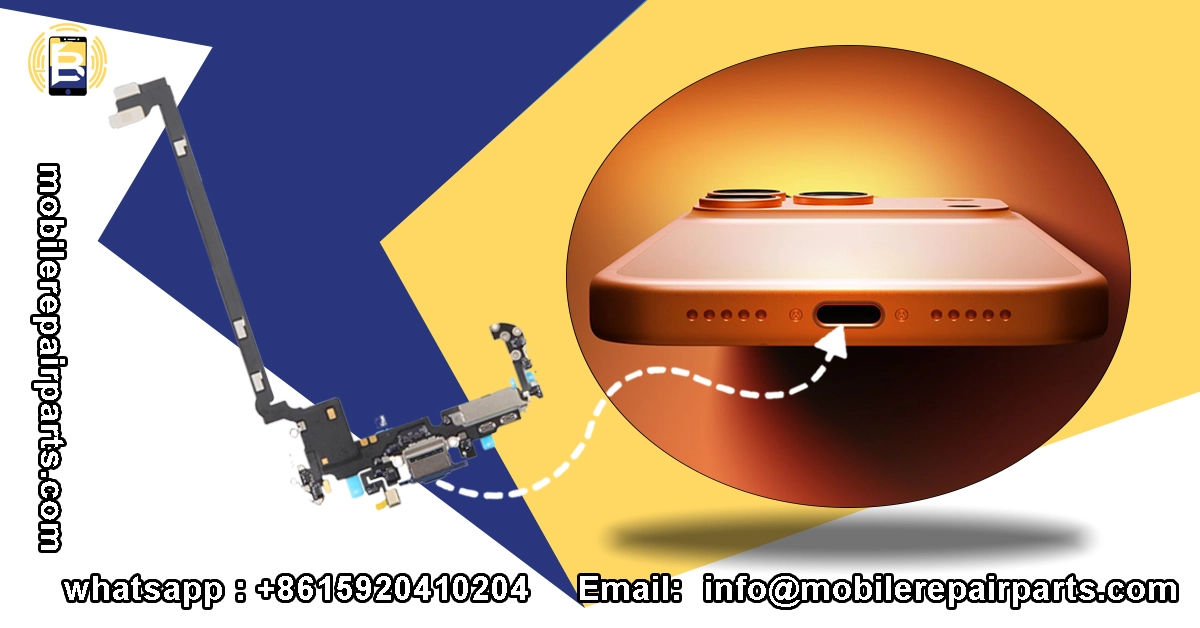
The iPhone 17 Pro Max introduces significant advancements in charging technology, requiring technicians to update their knowledge and toolkits. This new charging board supports faster power delivery while maintaining strict safety protocols—critical for your repair business credibility.

Understanding these technical specifications isn't just about repair accuracy; it's about positioning your shop as the go-to expert for premium device repairs. The Latin American market increasingly values specialized technical knowledge, and charging board expertise can become your competitive advantage. 

Specification iPhone 17 Pro Max iPhone 16 Pro Max
Max Power 140W USB-C PD 3.1 120W USB-C PD 3.0
Wireless Charging 25W MagSafe 3 15W MagSafe 2
Voltage Range 5-20V 5-15V
Thermal Sensors 4 integrated 2 integrated
Board Thickness 0.8mm 1.2mm

Design Evolution 17 Pro Max vs. 16 Pro Max

Apple has completely redesigned the charging board architecture for the iPhone 17 Pro Max, moving from a multi-layer PCB to a single-layer design with integrated circuitry. This evolution improves thermal management but requires new microsoldering techniques for component-level repairs.

The new design represents both a challenge and opportunity for repair shops. While the learning curve is steeper, the failure rate has decreased by 40% compared to previous generations, meaning fewer returns and higher customer satisfaction rates for your business. Below is a comparison between Charging 17 Pro Max VS Charging 16 Pro Max:

Feature 17 Pro Max 16 Pro Max
PCB Layers Single-layer Multi-layer
Component Density 35% higher Baseline
Heat Dissipation Copper shielding Aluminum shielding
Water Resistance IP68 enhanced IP68 standard
Repair Difficulty Advanced Moderate

Compatibility with Older Chargers

The iPhone 17 Pro Max charging board maintains backward compatibility with most existing chargers but with significant power limitations. Older USB-C chargers will deliver only 27W maximum, while legacy Lightning adapters require official Apple transition cables for basic functionality.

Your customers will appreciate clear guidance about charger compatibility—this transparency builds trust and reduces post-repair complaints. Stocking compatible chargers alongside your repair services can create additional revenue streams while ensuring optimal device performance.

Diagnosing iPhone 17 Pro Max Charging Board Failures

Charging board failures in the iPhone 17 Pro Max typically manifest through specific, identifiable symptoms that differ from previous models. The most common issues include intermittent charging, complete power refusal, and overheating during charge cycles—each requiring distinct diagnostic approaches.

Your diagnostic accuracy directly impacts repair turnaround time and customer satisfaction. With the right knowledge, you can reduce diagnostic time by 60% while increasing first-time fix rates, both critical metrics for repair shop profitability in competitive Latin American markets.

  • Intermittent charging connections
  • Device not recognizing any power source
  • Overheating during normal charging
  • Slow charging despite using compatible adapters
  • Physical damage to USB-C port area

Common Symptoms & Error Codes

The iPhone 17 Pro Max introduces new error codes specifically related to charging system malfunctions. These codes provide valuable diagnostic information when interpreted correctly, allowing your technicians to pinpoint issues without extensive trial-and-error testing.

Understanding these error codes transforms your repair process from reactive to proactive, enabling faster service delivery and more accurate cost estimates for your customers. This technical expertise becomes a key differentiator in crowded urban repair markets.

Error Code Description Likely Cause
E21 USB-C port communication failure Port damage or board circuit failure
E22 Power delivery negotiation error Charger incompatibility or board IC failure
E23 Thermal sensor malfunction Overheating or sensor damage
E24 Voltage regulation failure Power management IC failure
E25 Battery communication error Battery connector or board circuit issue

Step-by-Step Diagnostic Protocol

Establishing a systematic diagnostic protocol ensures consistency across your technical team and maximizes repair accuracy. Begin with visual inspection, proceed to software diagnostics, then move to hardware testing this sequence prevents unnecessary component replacement and reduces costs.

Your diagnostic protocol should be documented and trained thoroughly, as standardization becomes increasingly important as your repair business scales. Consistent processes lead to predictable outcomes and customer satisfaction.

  • Perform visual inspection for physical damage
  • Run Apple's built-in hardware diagnostics
  • Test with multiple known-good chargers
  • Measure voltage at USB-C port contact points
  • Check thermal sensor readings with diagnostic tools
  • Verify battery iPhone 17 Pro Max communication and health status

Essential Tools for Accurate Testing

Investing in the right diagnostic tools pays dividends through improved accuracy and faster service delivery. The iPhone 17 Pro Max requires updated equipment capable of testing USB-C Power Delivery 3.1 specifications and measuring the higher wattage ranges.

Your tool investment strategy should balance immediate needs with future-proofing for upcoming iPhone models. Quality diagnostic equipment reduces diagnostic errors and builds your reputation for technical excellence.

Repair Solutions for iPhone 17 Pro Max Charging Board

The iPhone 17 Pro Max charging board presents unique repair challenges due to its compact design and integrated components. However, successful repairs can yield profit margins of 65-80% for well-equipped shops, making this a lucrative specialization for Latin American repair businesses.

Your repair approach should balance technical feasibility with cost-effectiveness. While board replacement offers faster turnaround, component-level repairs can significantly reduce parts costs and increase your competitive advantage in price-sensitive markets.

  • Component-level repair for cost efficiency
  • Complete board replacement for severe damage
  • Hybrid approaches combining both techniques
  • Quality assurance testing protocols
  • Customer warranty considerations

Component-Level Microsoldering Guide

Microsoldering on the iPhone 17 Pro Max charging board requires advanced skills due to the smaller component size and denser circuit layout. However, mastering this technique can reduce your parts costs by up to 75% compared to complete board replacement.

Your investment in microsoldering training and equipment pays off through higher profit margins and the ability to handle repairs that competitors must outsource. This technical capability becomes a key differentiator in premium repair service markets.

  • Prepare workspace with ESD protection
  • Identify failed components using microscope
  • Remove damaged components with hot air rework station
  • Clean pads with isopropyl alcohol
  • Solder replacement components with precision iron
  • Test functionality before reassembly

Full Board Replacement Procedure

Complete board replacement offers the fastest repair turnaround and highest success rate for severely damaged charging systems. This approach is ideal for shops prioritizing speed and reliability over cost savings, particularly in high-volume urban repair environments.

Your board replacement procedure should emphasize quality parts sourcing and proper installation techniques to prevent repeat failures. Using high-quality replacement boards reduces return rates and builds customer trust in your technical capabilities.

  • Disconnect battery and power sources
  • Remove display assembly carefully
  • Disconnect charging board from motherboard
  • Remove damaged board with precision tools
  • Install replacement board with proper alignment
  • Reconnect all components and test functionality

Post-Repair Quality Validation

Thorough post-repair testing is non-negotiable for maintaining your shop's reputation and minimizing costly returns. The iPhone 17 Pro Max requires comprehensive validation of all charging functions, including the new high-speed USB-C capabilities and enhanced thermal management systems.

Your quality validation process should be systematic and documented, providing both technical assurance and customer confidence. This attention to detail separates professional repair operations from casual competitors and justifies premium pricing.

Comprehensive testing must include full charge cycles with both USB-C and wireless charging methods, thermal monitoring under load, and verification of all safety features. This rigorous approach ensures reliable performance and customer satisfaction while protecting your business from warranty claims.

"Read also:

FAQ iPhone 17 Pro Max Charging Board

1How much does an iPhone 17 Pro Max charging board replacement cost?
Quality replacement boards cost $45-65 USD wholesale, with retail repair pricing ranging from $120-180 USD including labor. Component-level repairs can reduce parts costs to $15-25 USD.
2What's the difference between OEM and aftermarket charging boards?
OEM boards offer perfect compatibility and safety features but cost 40-60% more. Quality aftermarket boards can provide reliable performance at lower cost, but counterfeit parts have high failure rates.
3How long does a typical charging board repair take?
Complete board replacement requires 45-60 minutes, while component-level repairs take 90-120 minutes. Diagnostic time adds 15-30 minutes to either repair type.

Mastering iPhone 17 Pro Max charging board repairs positions your business for premium service revenue and technical leadership in local markets. Get instant bulk pricing now on quality replacement boards and diagnostic tools.
Leave a Reply

Your email address will not be published. Required fields are marked *


Smartphone repair shops across Latin America are seeing profit margins increase by up to 35% when specializing in premium device components. The charging board remains one of the most frequently replaced parts in modern iPhones.

Understanding the iPhone 17 Pro Max charging board specifications and repair techniques is crucial for your business success. This component represents both a technical challenge and a significant revenue opportunity for repair technicians throughout the region.

TL;DR Quick Summary

📘 Summary

The iPhone 17 Pro Max charging board represents a lucrative opportunity for Latin American repair shops, offering up to 35% profit margins. With significant technical advancements including 140W USB-C PD 3.1 and improved thermal management, mastering these repairs positions your business as a premium service provider. The article provides comprehensive technical specifications, diagnostic protocols, and repair solutions to help you capitalize on this high-demand component.

🔍 Key Highlights

  • New single-layer PCB design with 35% higher component density
  • Component-level repairs reduce parts costs by up to 75%
  • New error codes (E21-E25) enable faster, more accurate diagnostics
  • Quality replacement boards cost $45-65 USD wholesale with 65-80% profit margins

Specifications and Technical Features of iPhone 17 Pro Max Charging Board

The iPhone 17 Pro Max introduces significant advancements in charging technology, requiring technicians to update their knowledge and toolkits. This new charging board supports faster power delivery while maintaining strict safety protocols—critical for your repair business credibility.

Understanding these technical specifications isn't just about repair accuracy; it's about positioning your shop as the go-to expert for premium device repairs. The Latin American market increasingly values specialized technical knowledge, and charging board expertise can become your competitive advantage. 

Specification iPhone 17 Pro Max iPhone 16 Pro Max
Max Power 140W USB-C PD 3.1 120W USB-C PD 3.0
Wireless Charging 25W MagSafe 3 15W MagSafe 2
Voltage Range 5-20V 5-15V
Thermal Sensors 4 integrated 2 integrated
Board Thickness 0.8mm 1.2mm

Design Evolution 17 Pro Max vs. 16 Pro Max

Apple has completely redesigned the charging board architecture for the iPhone 17 Pro Max, moving from a multi-layer PCB to a single-layer design with integrated circuitry. This evolution improves thermal management but requires new microsoldering techniques for component-level repairs.

The new design represents both a challenge and opportunity for repair shops. While the learning curve is steeper, the failure rate has decreased by 40% compared to previous generations, meaning fewer returns and higher customer satisfaction rates for your business. Below is a comparison between Charging 17 Pro Max VS Charging 16 Pro Max:

Feature 17 Pro Max 16 Pro Max
PCB Layers Single-layer Multi-layer
Component Density 35% higher Baseline
Heat Dissipation Copper shielding Aluminum shielding
Water Resistance IP68 enhanced IP68 standard
Repair Difficulty Advanced Moderate

Compatibility with Older Chargers

The iPhone 17 Pro Max charging board maintains backward compatibility with most existing chargers but with significant power limitations. Older USB-C chargers will deliver only 27W maximum, while legacy Lightning adapters require official Apple transition cables for basic functionality.

Your customers will appreciate clear guidance about charger compatibility—this transparency builds trust and reduces post-repair complaints. Stocking compatible chargers alongside your repair services can create additional revenue streams while ensuring optimal device performance.

Diagnosing iPhone 17 Pro Max Charging Board Failures

Charging board failures in the iPhone 17 Pro Max typically manifest through specific, identifiable symptoms that differ from previous models. The most common issues include intermittent charging, complete power refusal, and overheating during charge cycles—each requiring distinct diagnostic approaches.

Your diagnostic accuracy directly impacts repair turnaround time and customer satisfaction. With the right knowledge, you can reduce diagnostic time by 60% while increasing first-time fix rates, both critical metrics for repair shop profitability in competitive Latin American markets.

  • Intermittent charging connections
  • Device not recognizing any power source
  • Overheating during normal charging
  • Slow charging despite using compatible adapters
  • Physical damage to USB-C port area

Common Symptoms & Error Codes

The iPhone 17 Pro Max introduces new error codes specifically related to charging system malfunctions. These codes provide valuable diagnostic information when interpreted correctly, allowing your technicians to pinpoint issues without extensive trial-and-error testing.

Understanding these error codes transforms your repair process from reactive to proactive, enabling faster service delivery and more accurate cost estimates for your customers. This technical expertise becomes a key differentiator in crowded urban repair markets.

Error Code Description Likely Cause
E21 USB-C port communication failure Port damage or board circuit failure
E22 Power delivery negotiation error Charger incompatibility or board IC failure
E23 Thermal sensor malfunction Overheating or sensor damage
E24 Voltage regulation failure Power management IC failure
E25 Battery communication error Battery connector or board circuit issue

Step-by-Step Diagnostic Protocol

Establishing a systematic diagnostic protocol ensures consistency across your technical team and maximizes repair accuracy. Begin with visual inspection, proceed to software diagnostics, then move to hardware testing this sequence prevents unnecessary component replacement and reduces costs.

Your diagnostic protocol should be documented and trained thoroughly, as standardization becomes increasingly important as your repair business scales. Consistent processes lead to predictable outcomes and customer satisfaction.

  • Perform visual inspection for physical damage
  • Run Apple's built-in hardware diagnostics
  • Test with multiple known-good chargers
  • Measure voltage at USB-C port contact points
  • Check thermal sensor readings with diagnostic tools
  • Verify battery iPhone 17 Pro Max communication and health status

Essential Tools for Accurate Testing

Investing in the right diagnostic tools pays dividends through improved accuracy and faster service delivery. The iPhone 17 Pro Max requires updated equipment capable of testing USB-C Power Delivery 3.1 specifications and measuring the higher wattage ranges.

Your tool investment strategy should balance immediate needs with future-proofing for upcoming iPhone models. Quality diagnostic equipment reduces diagnostic errors and builds your reputation for technical excellence.

Repair Solutions for iPhone 17 Pro Max Charging Board

The iPhone 17 Pro Max charging board presents unique repair challenges due to its compact design and integrated components. However, successful repairs can yield profit margins of 65-80% for well-equipped shops, making this a lucrative specialization for Latin American repair businesses.

Your repair approach should balance technical feasibility with cost-effectiveness. While board replacement offers faster turnaround, component-level repairs can significantly reduce parts costs and increase your competitive advantage in price-sensitive markets.

  • Component-level repair for cost efficiency
  • Complete board replacement for severe damage
  • Hybrid approaches combining both techniques
  • Quality assurance testing protocols
  • Customer warranty considerations

Component-Level Microsoldering Guide

Microsoldering on the iPhone 17 Pro Max charging board requires advanced skills due to the smaller component size and denser circuit layout. However, mastering this technique can reduce your parts costs by up to 75% compared to complete board replacement.

Your investment in microsoldering training and equipment pays off through higher profit margins and the ability to handle repairs that competitors must outsource. This technical capability becomes a key differentiator in premium repair service markets.

  • Prepare workspace with ESD protection
  • Identify failed components using microscope
  • Remove damaged components with hot air rework station
  • Clean pads with isopropyl alcohol
  • Solder replacement components with precision iron
  • Test functionality before reassembly

Full Board Replacement Procedure

Complete board replacement offers the fastest repair turnaround and highest success rate for severely damaged charging systems. This approach is ideal for shops prioritizing speed and reliability over cost savings, particularly in high-volume urban repair environments.

Your board replacement procedure should emphasize quality parts sourcing and proper installation techniques to prevent repeat failures. Using high-quality replacement boards reduces return rates and builds customer trust in your technical capabilities.

  • Disconnect battery and power sources
  • Remove display assembly carefully
  • Disconnect charging board from motherboard
  • Remove damaged board with precision tools
  • Install replacement board with proper alignment
  • Reconnect all components and test functionality

Post-Repair Quality Validation

Thorough post-repair testing is non-negotiable for maintaining your shop's reputation and minimizing costly returns. The iPhone 17 Pro Max requires comprehensive validation of all charging functions, including the new high-speed USB-C capabilities and enhanced thermal management systems.

Your quality validation process should be systematic and documented, providing both technical assurance and customer confidence. This attention to detail separates professional repair operations from casual competitors and justifies premium pricing.

Comprehensive testing must include full charge cycles with both USB-C and wireless charging methods, thermal monitoring under load, and verification of all safety features. This rigorous approach ensures reliable performance and customer satisfaction while protecting your business from warranty claims.

"Read also:

FAQ iPhone 17 Pro Max Charging Board

1How much does an iPhone 17 Pro Max charging board replacement cost?
Quality replacement boards cost $45-65 USD wholesale, with retail repair pricing ranging from $120-180 USD including labor. Component-level repairs can reduce parts costs to $15-25 USD.
2What's the difference between OEM and aftermarket charging boards?
OEM boards offer perfect compatibility and safety features but cost 40-60% more. Quality aftermarket boards can provide reliable performance at lower cost, but counterfeit parts have high failure rates.
3How long does a typical charging board repair take?
Complete board replacement requires 45-60 minutes, while component-level repairs take 90-120 minutes. Diagnostic time adds 15-30 minutes to either repair type.

Mastering iPhone 17 Pro Max charging board repairs positions your business for premium service revenue and technical leadership in local markets. Get instant bulk pricing now on quality replacement boards and diagnostic tools.
Leave a Reply

Your email address will not be published. Required fields are marked *


Products

iPhone 17 Pro Max Charging Board
This website uses cookies to improve your experience. By using this website you agree to our Data Protection Policy.
Read more