
BETA Electronic Co LTD

BETA Electronic Co LTD

BETA Electronic Co LTD

Why Hard OLED Screens Are the Best Choice for Wholesale Mobile Spare Parts in Latin America


In the rapidly growing mobile phone maintenance market across Latin America, choosing the right type of display is a critical factor in the success or failure of a wholesale business. With the variety of options available, hard OLED displays are becoming an increasingly popular choice as a viable alternative to traditional LCD and even soft OLED displays. For distributors and resellers who rely on importing parts from China, familiarity with the features and characteristics of hard OLEDs is key to maintaining competitiveness and achieving better profit margins. This article aims to provide Latin American wholesalers with clear information to help them make smarter and more effective purchasing decisions.

Types of mobile phone screens: LCD, OLED, and Hard OLED

When working in mobile phone repair or wholesale parts distribution, understanding screen technologies is essential. The three most common types are LCD, OLED, and the increasingly popular Hard OLED.

What is an LCD display?

LCD (liquid crystal display) displays are known for being widely available and affordable. They use backlighting to produce images, making them thicker and less vibrant than OLED displays. LCD screens are still widely used in low-cost models and budget alternatives.

What are OLED displays?

OLED (Organic Light-Emitting Diode) displays are an advanced display technology used in smartphones, characterized by each pixel being independently illuminated, giving more vibrant colors and deep contrast. It is divided into two main types:

  • Soft OLED: Flexible and light, it offers high quality and is often used in OEM displays.
  • Hard OLED: More rigid and less expensive, but less flexible and less durable than Soft OLED, and is an economical option for parts dealers.

What is a Hard OLED screen?

Hard OLED screens are a type of OLED screen made using a rigid glass layer instead of the flexible plastic layer used in soft OLED displays. These displays maintain the vivid colors, deep contrast, and responsiveness that OLED technology is known for,

OLED displays do not require backlighting. Because each pixel lights up independently, allowing for better contrast, deeper blacks, and more accurate colors. This makes OLED displays more visually appealing but often more expensive than LCD screens. But they come at a reasonable price for mass buyers targeting the mid-range and budget markets.
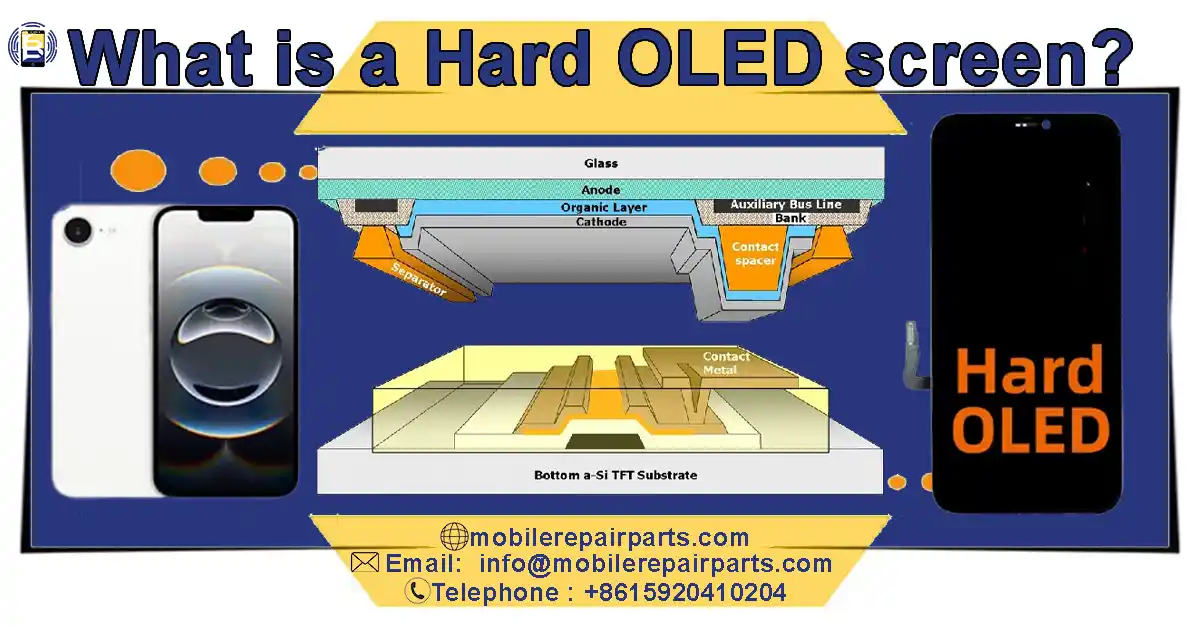
Comparison between Hard OLED, Soft OLED and LCD displays

  • Soft OLED: More flexible and structurally closer to OEM displays, offering excellent display quality and responsiveness. However, they are typically more expensive.
  • Hard OLED: Provide a balanced solution between performance and cost. Optically similar to soft OLEDs, but made from a solid glass substrate to minimize production costs while maintaining high image quality.
  • LCD screens: A budget-friendly option, but with lower color accuracy, brightness, and contrast compared to OLED technologies.

The following table shows the differences between the three screen types:

Standard Hard OLED Soft OLED LCD
Durability Medium-high High Medium
Cost Medium High Very low
Image Quality Excellent Near OEM Poor
Thickness Medium Thin Thick
Power Consumption Moderate Low

High

Summary: Soft OLED offers the best quality and flexibility but at a premium price. Hard OLED strikes a balance between cost and quality, making it perfect for wholesale buyers. LCDs remain the cheapest option but lag in performance and visual appeal.

Why are OLED screens important for phone repair and refurbishment?

For repair centers in Latin America, especially in countries like Colombia, Chile and Guatemala, Hard OLED technology provides a cost-effective solution with minimal compromise on quality. It allows resellers to meet the demand for iPhone and Samsung maintenance while maintaining good profit margins.

Key Features of Hard OLED Screens

  • Excellent balance between quality and price: An economical option that offers acceptable display quality at a lower price, making it suitable for the mid- and low-cost markets.
  • Easy to produce and readily available: They are manufactured using solid glass rather than flexible materials, which reduces cost and makes their availability in the market more stable.
  • Suitable for refurbishing phones: They are widely used in refurbishing and reselling phones, as they make a good profit margin without sacrificing quality.
  • Much better color quality than traditional LCD screens.
  • Can be seen clearly through polarized glasses.
  • Easier to solder integrated circuits, making them desirable for technicians.

Disadvantages of Hard OLED displays

While Hard OLED displays are an economical and convenient option for balancing performance and price, they do have some disadvantages that you should be aware of:

  • Lack of flexibility: Hard OLED displays rely on a rigid glass base, making them less flexible and more prone to breakage during installation or when over-pressurized.
  • Shorter lifespan: Compared to Soft OLED displays, less durable materials may be used, resulting in degraded performance over time.
  • Less tactile response in some cases: Touch sensitivity may be slightly weaker compared to high-quality Soft OLED displays.
  • Sometimes lower color accuracy: Despite the visual similarity, some Hard OLED displays may exhibit less contrast or lower brightness compared to higher-quality types such as Soft OLED.
  • Not suitable for curved screens: Due to their rigid construction, Hard OLED displays are not an ideal choice for phones with curved edges or flexible designs.

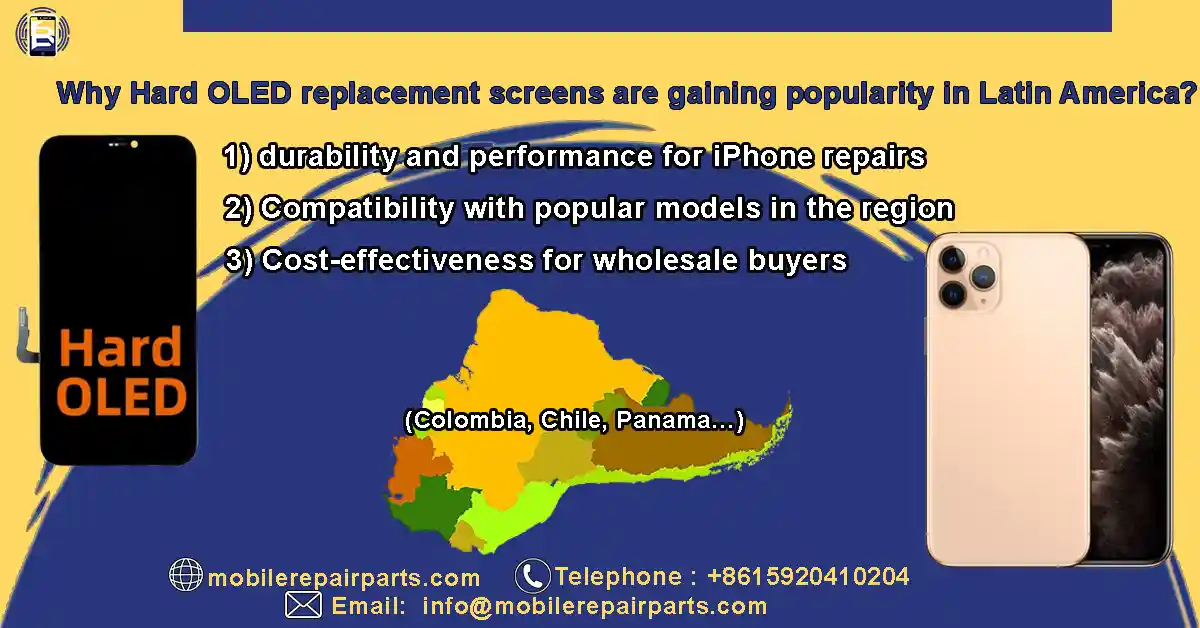
Why Hard OLED replacement screens are gaining popularity in Latin America?

1- durability and performance for iPhone repairs:

For high-demand models such as iPhone X, XS, iPhone 11 Pro and iPhone 13 Pro Max, Hard OLED Screens offer a more durable and visually similar alternative to soft OLED at a lower cost. This balance is ideal for service centers and wholesale distributors in Latin America.

2- Compatibility with popular models in the region:

iPhones are especially popular in markets such as Colombia, Chile, Panama, and Venezuela. Hard OLED displays are widely available for these models, making it a strategic product for inventory.

3- Cost-effectiveness for wholesale buyers:

From a wholesale perspective, solid OLEDs provide an opportunity to offer OLED-like quality with LCD-like pricing. When importing from China, bulk orders can significantly reduce the cost per unit.
Hard OLED vs. Soft OLED vs. LCD: What should you import?

It is important for wholesalers to consider key points before importing displays of various types, the most important of which are:

1- Key technical differences:

  • Soft OLED: More flexible and thinner but more expensive.
  • Hard OLED: Rigid, durable, almost the same display quality, and more affordable.
  • LCD: Lower display quality, cheaper, but more power-hungry and thinner.

2- Understanding market demand trends in Latin America:

In cities like Bogota, Santiago, San Jose and Venezuela, there is a growing demand for affordable, high-quality display alternatives. Hard OLED displays are reaching this sweet spot and becoming the screen type of choice for savvy wholesalers.

3- Profit margins and maintenance success rates:

Hard OLEDs allow for higher profit margins compared to soft OLEDs, especially when purchased in bulk from China. They also have a lower return rate than cheaper LCDs due to customer satisfaction.

Best screen type by phone model: What is the best replacement screen for each phone model?

When choosing a replacement screen, it's important to know which type is best for specific models. Here's a breakdown of recommended screen types by phone models popular in the Latin American market:

-Hard OLED screens (best for mid-range and premium repairs while saving cost):

Ideal for iPhone X, iPhone XS, iPhone 11 Pro, iPhone 12, iPhone 13, Samsung Galaxy S20, and Galaxy A71.

These phones benefit from OLED quality at a lower cost, especially for bulk repairs and refurbishments.

-Soft OLED displays (best for OEM-like performance and premium phones):

Suitable for iPhone 13 Pro Max, iPhone 14 Pro, iPhone 15 Pro Max, Samsung Galaxy S22 Ultra, Galaxy S23+, and foldable phones.

These models require top-notch quality and flexibility, making soft OLED displays the best fit.

-LCD (best for budget-friendly models or older phones):

Recommended for the iPhone 6, iPhone 7, iPhone 8, iPhone SE 2020, and the Samsung Galaxy A10, A20, A30, and M11.

LCD screen replacements are sufficient and cost-effective for basic repair needs, and matching the screen type to the right phone model not only ensures better performance and customer satisfaction, but also helps wholesalers optimize inventory and reduce returns.

5 tips for wholesale distributors: How to choose the right screen type

  1. Identify the most popular phone models in the local market.
  2. Work with reliable Chinese suppliers with experience in wholesale export to Latin America, providing you with hard, reliable OLED displays with certified quality control. At our company BETA Electronic Co LTD, we provide high-quality, certified OLED displays for wholesalers. Contact us via WhatsApp or email: info@mobilerepairparts.com.
  3. Balancing quality and price for your market: Every market has its own preferred niche between quality and price. Hard OLED displays often provide the best value-for-money option for mid- and high-end customers.
  4. Keep an eye on market trends and stay away from overstocking: Keep an eye on the demand for phone models and market trends in your country, and focus on buying screens that have clear movement. Avoid buying large quantities of outdated or low-demand models to minimize risk and inventory losses.
  5. Test samples before buying in bulk: Before purchasing large orders, get samples of the monitors and test them for performance, color quality, touch strength, and durability. This step helps you ensure that the product meets your customers' expectations and avoids unpleasant surprises after importation.

Importing Hard OLED Screens from China

Importing mobile phone displays, especially Hard OLED displays, from China is a strategic move for wholesalers in Latin America. With growing demand and increasing repair activity in the region, knowing how to navigate the Chinese supply chain gives you a significant business advantage.

Why do Chinese suppliers dominate the market for mobile phone parts including screens?

Because China is the global center of mobile phone parts manufacturing, especially in cities like Shenzhen and Guangzhou, Our company, based in Guangzhou, offers high-quality mobile phone spare parts at unbeatable prices, specially designed for wholesalers. These regions are home to advanced product lines and competitive prices. Suppliers there offer OEM-level performance with flexible order quantities, a big advantage for importers in Latin America who need scalable options to meet growing demand.

We recommend you read our next article to learn more about China's mobile phone parts market, A comprehensive guide to importing mobile phone parts from China: Quality, Prices, and Shipping to Latin America.

Is Hard OLED the right investment for your business?

If you are targeting medium to high-quality repairs and want a competitive price advantage, Hard OLED displays are an excellent investment. They offer a reliable combination of quality, affordability, and growing demand in the Latin American markets.

By choosing the right suppliers in China and staying on top of local trends, you can confidently expand your mobile phone parts business with Hard OLED displays.

Start your import project now and get in contact with us. After many years in the mobile phone spare parts supply business, we at BETA Electronic Co LTD provide you wholesale phone parts  with high quality and competitive prices.

FAQs about Hard OLED screen

Are Hard OLED screens better than LCD for iPhone repairs?

Yes, Hard OLED offers better display quality and thinner design, making it a preferred option for premium iPhone repairs.

Does Apple use soft or hard OLED?

Apple uses Soft OLED screens in its phones because they are flexible, more durable, and provide high display quality. Hard OLED displays are used as an alternative option to OEM displays.

Do OLED displays cause eye strain?

OLED displays do not cause eye strain in general, and offer high display quality with excellent contrast and clear colors that reduce eye strain especially in low light.

However, some sensitive people may experience strain due to the brightness modulation method (PWM) in some OLED displays at low brightness levels.

It is therefore advisable to use eye rest mode or increase the brightness to minimize any negative impact.

In conclusion, Hard OLED screens are the smart choice for wholesale buyers in Latin America who want to offer premium repairs without going over budget. Their balance of quality, price, and availability makes them ideal for companies focused on increasing sales and customer satisfaction.

If you are a wholesaler or have a service center and are looking to import reliable, high-quality OLED displays at the best prices - we are here to help you. We provide you with certified hard OLED displays tailored to meet the needs of the Latin American market.

 Contact us to request a price list and inquire about available models. Let us help you expand your cell phone parts business.

Leave a Reply

Your email address will not be published. Required fields are marked *


In the rapidly growing mobile phone maintenance market across Latin America, choosing the right type of display is a critical factor in the success or failure of a wholesale business. With the variety of options available, hard OLED displays are becoming an increasingly popular choice as a viable alternative to traditional LCD and even soft OLED displays. For distributors and resellers who rely on importing parts from China, familiarity with the features and characteristics of hard OLEDs is key to maintaining competitiveness and achieving better profit margins. This article aims to provide Latin American wholesalers with clear information to help them make smarter and more effective purchasing decisions.

Types of mobile phone screens: LCD, OLED, and Hard OLED

When working in mobile phone repair or wholesale parts distribution, understanding screen technologies is essential. The three most common types are LCD, OLED, and the increasingly popular Hard OLED.

What is an LCD display?

LCD (liquid crystal display) displays are known for being widely available and affordable. They use backlighting to produce images, making them thicker and less vibrant than OLED displays. LCD screens are still widely used in low-cost models and budget alternatives.

What are OLED displays?

OLED (Organic Light-Emitting Diode) displays are an advanced display technology used in smartphones, characterized by each pixel being independently illuminated, giving more vibrant colors and deep contrast. It is divided into two main types:

  • Soft OLED: Flexible and light, it offers high quality and is often used in OEM displays.
  • Hard OLED: More rigid and less expensive, but less flexible and less durable than Soft OLED, and is an economical option for parts dealers.

What is a Hard OLED screen?

Hard OLED screens are a type of OLED screen made using a rigid glass layer instead of the flexible plastic layer used in soft OLED displays. These displays maintain the vivid colors, deep contrast, and responsiveness that OLED technology is known for,

OLED displays do not require backlighting. Because each pixel lights up independently, allowing for better contrast, deeper blacks, and more accurate colors. This makes OLED displays more visually appealing but often more expensive than LCD screens. But they come at a reasonable price for mass buyers targeting the mid-range and budget markets.

Comparison between Hard OLED, Soft OLED and LCD displays

  • Soft OLED: More flexible and structurally closer to OEM displays, offering excellent display quality and responsiveness. However, they are typically more expensive.
  • Hard OLED: Provide a balanced solution between performance and cost. Optically similar to soft OLEDs, but made from a solid glass substrate to minimize production costs while maintaining high image quality.
  • LCD screens: A budget-friendly option, but with lower color accuracy, brightness, and contrast compared to OLED technologies.

The following table shows the differences between the three screen types:

Standard Hard OLED Soft OLED LCD
Durability Medium-high High Medium
Cost Medium High Very low
Image Quality Excellent Near OEM Poor
Thickness Medium Thin Thick
Power Consumption Moderate Low

High

Summary: Soft OLED offers the best quality and flexibility but at a premium price. Hard OLED strikes a balance between cost and quality, making it perfect for wholesale buyers. LCDs remain the cheapest option but lag in performance and visual appeal.

Why are OLED screens important for phone repair and refurbishment?

For repair centers in Latin America, especially in countries like Colombia, Chile and Guatemala, Hard OLED technology provides a cost-effective solution with minimal compromise on quality. It allows resellers to meet the demand for iPhone and Samsung maintenance while maintaining good profit margins.

Key Features of Hard OLED Screens

  • Excellent balance between quality and price: An economical option that offers acceptable display quality at a lower price, making it suitable for the mid- and low-cost markets.
  • Easy to produce and readily available: They are manufactured using solid glass rather than flexible materials, which reduces cost and makes their availability in the market more stable.
  • Suitable for refurbishing phones: They are widely used in refurbishing and reselling phones, as they make a good profit margin without sacrificing quality.
  • Much better color quality than traditional LCD screens.
  • Can be seen clearly through polarized glasses.
  • Easier to solder integrated circuits, making them desirable for technicians.

Disadvantages of Hard OLED displays

While Hard OLED displays are an economical and convenient option for balancing performance and price, they do have some disadvantages that you should be aware of:

  • Lack of flexibility: Hard OLED displays rely on a rigid glass base, making them less flexible and more prone to breakage during installation or when over-pressurized.
  • Shorter lifespan: Compared to Soft OLED displays, less durable materials may be used, resulting in degraded performance over time.
  • Less tactile response in some cases: Touch sensitivity may be slightly weaker compared to high-quality Soft OLED displays.
  • Sometimes lower color accuracy: Despite the visual similarity, some Hard OLED displays may exhibit less contrast or lower brightness compared to higher-quality types such as Soft OLED.
  • Not suitable for curved screens: Due to their rigid construction, Hard OLED displays are not an ideal choice for phones with curved edges or flexible designs.

Why Hard OLED replacement screens are gaining popularity in Latin America?

1- durability and performance for iPhone repairs:

For high-demand models such as iPhone X, XS, iPhone 11 Pro and iPhone 13 Pro Max, Hard OLED Screens offer a more durable and visually similar alternative to soft OLED at a lower cost. This balance is ideal for service centers and wholesale distributors in Latin America.

2- Compatibility with popular models in the region:

iPhones are especially popular in markets such as Colombia, Chile, Panama, and Venezuela. Hard OLED displays are widely available for these models, making it a strategic product for inventory.

3- Cost-effectiveness for wholesale buyers:

From a wholesale perspective, solid OLEDs provide an opportunity to offer OLED-like quality with LCD-like pricing. When importing from China, bulk orders can significantly reduce the cost per unit.

Hard OLED vs. Soft OLED vs. LCD: What should you import?

It is important for wholesalers to consider key points before importing displays of various types, the most important of which are:

1- Key technical differences:

  • Soft OLED: More flexible and thinner but more expensive.
  • Hard OLED: Rigid, durable, almost the same display quality, and more affordable.
  • LCD: Lower display quality, cheaper, but more power-hungry and thinner.

2- Understanding market demand trends in Latin America:

In cities like Bogota, Santiago, San Jose and Venezuela, there is a growing demand for affordable, high-quality display alternatives. Hard OLED displays are reaching this sweet spot and becoming the screen type of choice for savvy wholesalers.

3- Profit margins and maintenance success rates:

Hard OLEDs allow for higher profit margins compared to soft OLEDs, especially when purchased in bulk from China. They also have a lower return rate than cheaper LCDs due to customer satisfaction.

Best screen type by phone model: What is the best replacement screen for each phone model?

When choosing a replacement screen, it's important to know which type is best for specific models. Here's a breakdown of recommended screen types by phone models popular in the Latin American market:

-Hard OLED screens (best for mid-range and premium repairs while saving cost):

Ideal for iPhone X, iPhone XS, iPhone 11 Pro, iPhone 12, iPhone 13, Samsung Galaxy S20, and Galaxy A71.

These phones benefit from OLED quality at a lower cost, especially for bulk repairs and refurbishments.

-Soft OLED displays (best for OEM-like performance and premium phones):

Suitable for iPhone 13 Pro Max, iPhone 14 Pro, iPhone 15 Pro Max, Samsung Galaxy S22 Ultra, Galaxy S23+, and foldable phones.

These models require top-notch quality and flexibility, making soft OLED displays the best fit.

-LCD (best for budget-friendly models or older phones):

Recommended for the iPhone 6, iPhone 7, iPhone 8, iPhone SE 2020, and the Samsung Galaxy A10, A20, A30, and M11.

LCD screen replacements are sufficient and cost-effective for basic repair needs, and matching the screen type to the right phone model not only ensures better performance and customer satisfaction, but also helps wholesalers optimize inventory and reduce returns.

5 tips for wholesale distributors: How to choose the right screen type

  1. Identify the most popular phone models in the local market.
  2. Work with reliable Chinese suppliers with experience in wholesale export to Latin America, providing you with hard, reliable OLED displays with certified quality control. At our company BETA Electronic Co LTD, we provide high-quality, certified OLED displays for wholesalers. Contact us via WhatsApp or email: info@mobilerepairparts.com.
  3. Balancing quality and price for your market: Every market has its own preferred niche between quality and price. Hard OLED displays often provide the best value-for-money option for mid- and high-end customers.
  4. Keep an eye on market trends and stay away from overstocking: Keep an eye on the demand for phone models and market trends in your country, and focus on buying screens that have clear movement. Avoid buying large quantities of outdated or low-demand models to minimize risk and inventory losses.
  5. Test samples before buying in bulk: Before purchasing large orders, get samples of the monitors and test them for performance, color quality, touch strength, and durability. This step helps you ensure that the product meets your customers' expectations and avoids unpleasant surprises after importation.

Importing Hard OLED Screens from China

Importing mobile phone displays, especially Hard OLED displays, from China is a strategic move for wholesalers in Latin America. With growing demand and increasing repair activity in the region, knowing how to navigate the Chinese supply chain gives you a significant business advantage.

Why do Chinese suppliers dominate the market for mobile phone parts including screens?

Because China is the global center of mobile phone parts manufacturing, especially in cities like Shenzhen and Guangzhou, Our company, based in Guangzhou, offers high-quality mobile phone spare parts at unbeatable prices, specially designed for wholesalers. These regions are home to advanced product lines and competitive prices. Suppliers there offer OEM-level performance with flexible order quantities, a big advantage for importers in Latin America who need scalable options to meet growing demand.

We recommend you read our next article to learn more about China's mobile phone parts market, A comprehensive guide to importing mobile phone parts from China: Quality, Prices, and Shipping to Latin America.

Is Hard OLED the right investment for your business?

If you are targeting medium to high-quality repairs and want a competitive price advantage, Hard OLED displays are an excellent investment. They offer a reliable combination of quality, affordability, and growing demand in the Latin American markets.

By choosing the right suppliers in China and staying on top of local trends, you can confidently expand your mobile phone parts business with Hard OLED displays.

Start your import project now and get in contact with us. After many years in the mobile phone spare parts supply business, we at BETA Electronic Co LTD provide you wholesale phone parts  with high quality and competitive prices.

FAQs about Hard OLED screen

Are Hard OLED screens better than LCD for iPhone repairs?

Yes, Hard OLED offers better display quality and thinner design, making it a preferred option for premium iPhone repairs.

Does Apple use soft or hard OLED?

Apple uses Soft OLED screens in its phones because they are flexible, more durable, and provide high display quality. Hard OLED displays are used as an alternative option to OEM displays.

Do OLED displays cause eye strain?

OLED displays do not cause eye strain in general, and offer high display quality with excellent contrast and clear colors that reduce eye strain especially in low light.

However, some sensitive people may experience strain due to the brightness modulation method (PWM) in some OLED displays at low brightness levels.

It is therefore advisable to use eye rest mode or increase the brightness to minimize any negative impact.

In conclusion, Hard OLED screens are the smart choice for wholesale buyers in Latin America who want to offer premium repairs without going over budget. Their balance of quality, price, and availability makes them ideal for companies focused on increasing sales and customer satisfaction.

If you are a wholesaler or have a service center and are looking to import reliable, high-quality OLED displays at the best prices - we are here to help you. We provide you with certified hard OLED displays tailored to meet the needs of the Latin American market.

 Contact us to request a price list and inquire about available models. Let us help you expand your cell phone parts business.
Leave a Reply

Your email address will not be published. Required fields are marked *


Products

Why Hard OLED Screens Are the Best Choice for Wholesale Mobile Spare Parts in Latin America
This website uses cookies to improve your experience. By using this website you agree to our Data Protection Policy.
Read more