

As a mobile phone wholesaler, are you ready for the profit—and the paperwork—that come with Apple’s new 45 W USB-C and 25 W MagSafe charging ecosystem on the iPhone 16 Pro? Latin America’s smartphone market surged to a record 137 million units in 2024, a 15 % jump year-on-year, signalling huge demand for premium devices and the accessories they require. Apple moved 3.1 million iPhones across LatAm in Q2 2025, a 14 % spike, proving premium stock turns in under 21 days when bundled with certified 45 W chargers.
Yet the window for margin can slam shut if you mis-declare HS 8517.12 on the handset or overlook the new <30% state-of-charge rule for UN 3481 lithium batteries in air freight—especially relevant for devices like the iPhone 16 Pro charging units. Add in wild BRL/USD swings that can wipe 4–6% off landed cost in a single month, and the stakes are clear: only disciplined operators who buy mobile phones wholesale with precision will win.
- Declare handsets under HS 8517.12, cables 8544.42, adapters 8504.40 to dodge re-assessment fines.
- Only Apple-MFi cables with 5 A E-markers unlock full 45 W PPS on iPhone 16 Pro.
- Ship batteries at ≤30 % SoC today; ICAO drops limit to 25 % starting 1 Jan 2026.
- Brazil’s ANATEL now demands QR + NFC tags on every charger—whitelist SKUs early.
- Hedge BRL/USD with 90-day forwards to protect 4–6 % landed-cost swings common in Q4.
Regulatory Compliance for iPhone 16 Pro Charging Imports

Before a single iPhone 16 Pro, USB-C cable, 30 W / 45 W power adapter or MagSafe pad can legally leave a European warehouse for Latin America, the shipment must pass three regulatory gauntlets: (1) tariff classification, which starts by declaring the handset itself under HS 8517.12 and listing each accessory on its correct sub-heading to avoid re-assessment fines; (2) Apple’s MFi licensing, now mandatory for all high-wattage USB-C and wireless chargers to secure the embedded auth-chip and protect the end-user’s warranty; and (3) safety / EMC approvals, which in the EU require CE marking under the Low-Voltage and Radio Equipment Directives, demand an FCC Supplier’s Declaration of Conformity if the goods transit the United States, and—crucially for ANATEL Act 5155 rev.2 (Aug 2025) adds NFC tag authentication for chargers; whitelist your SKUs now to avoid 30-day port holds. Getting these three pillars right up-front prevents seizure, re-export costs and weeks-long launch-window delays—turning regulatory red-tape into a smooth, margin-protecting supply chain.
HS 8517.12 Tariff Code & Accessory Sub-headings
- iPhone 16 Pro handset ➜ HS 8517.12 (“telephones for cellular networks or for other wireless networks”).
- USB-C charging & data cables ➜ HS 8544.42 (insulated wire fitted with connectors).
- 30 W / 45 W power adapters & wireless/MagSafe pads ➜ HS 8504.40 (static converters / external power supplies).
Apple MFi Certification for USB-C Cables, 30 W/45 W Adapters & MagSafe Pads
- Apple’s Made-for-iPhone/iPad (MFi) program now covers all USB-C accessories, including E-marked Power-Delivery cables that carry 30 W or 45 W. Joining the program unlocks the auth-chip, reference designs, and the right to print the MFi badge on retail boxes.
- Verification: Upload finished-goods samples to Apple’s online portal; electrical, mechanical, and firmware checks must pass before an MFi certificate is issued.
- Why it matters: Apple denies warranty service when uncertified bricks or cables damage the phone, leaving wholesalers liable.
Tip: Request the supplier’s MFi Product Plan ID and cross-check it against Apple’s public database before paying the balance.
Safety & EMC Marks: CE, FCC, ANATEL Act 5155 (Spain and Portugal)
-
1 . CE mark (Spain & Portugal):
- Accessories that radiate (MagSafe pads) fall under the Radio Equipment Directive 2014/53/EU; pure USB-C bricks fall under the Low-Voltage Directive 2014/35/EU and EMC Directive 2014/30/EU.
- Upload test reports (RF, LVD, EMC, RoHS) and a signed EU Declaration of Conformity to the EU Safety Gate database; keep the technical file for 10 years.
- As of 28 Dec 2024, all phones and small chargers sold in the EU must use USB-C and support harmonised fast-charging under Directive 2022/2380 (“Common Charger” law).
2 . FCC (for any US legs in your supply chain): If inventory passes through the US—common for Miami consolidation—USB-C power supplies need an FCC Part 15B Supplier’s Declaration of Conformity.
3 . ANATEL Act 5155 (Brazil-bound stock): Brazil replaced Act 5159 with Act 5155 in April 2024, raising electro-static-discharge (ESD) limits and mandating QR-code tracking labels on every wall or car charger. An ANATEL test report and homologation certificate must accompany the CE dossier when goods leave Portugal’s SINES port for Santos.
| Step | Document | Must-have details |
|---|---|---|
| Tariff classification | Commercial invoice & SAD | HS 8517.12 / 8544.42 / 8504.40 codes |
| Product safety | EU DoC + CE label | Directives 2014/53/EU, 2014/35/EU, 2014/30/EU |
| Apple licence | MFi certificate & badge | Product Plan ID, auth-chip lot |
| Radio compliance | RED test reports | Qi2 RF exposure & EMC |
| Brazil market | ANATEL certificate | Act 5155 ESD & QR label |
45 W USB-C Fast-Charging Requirements and Heat Limits
-
Protocol handshake – iPhone 16 Pro negotiates USB PD 3.1 with either a fixed 15 V × 3 A or PPS stepping up to 20 V / 24 V as long as the adapter can deliver ≈45 W sustained. The phone requests 5-mV/50-mA PPS steps after the battery reaches ~30 % to keep efficiency high.
-
Cable & E-Marker – The USB-C cable must contain an Apple-approved E-Marker that advertises ≥5 A capability; otherwise the phone caps draw at 9 V × 2.22 A (≈20 W) even if the adapter can supply more.
-
Thermal governance – iOS halts or throttles charging when the battery temperature approaches 40 - 42 °C, and it shows a “Charging On Hold” banner if ambient temperature rises above 35 °C. For engineering tests, keep the rear-case hotspot below 43 °C for a continuous 10-minute 45 W run; log ΔT every 30 s.
-
Acceptance criteria
- From 0 – 50 % state-of-charge, average power ≥38 W for ≥8 min.
- Voltage droop under 600 mV during 1 A load step.
- Surface temperature rise ≤17 °C above 23 °C ambient at the aluminium frame.

25 W MagSafe (Qi2) Wireless Parameters and Alignment Tests
-
Standard – iPhone 16 implements the Qi2 Magnetic Power Profile (MPP) that lifts MagSafe speed to 25 W when paired with a Qi2-certified puck.
-
Power window – The phone demands 9 V × 2.77 A at the coil when the adapter can supply ≥30 W; it reverts to the legacy 15 W EPP mode if the adapter is <20 W or the coil mis-aligns.
-
Alignment tolerance – WPC test plan requires magnetic centring within ±3 mm radial offset for 25 W; outside that window the transmitter must fold back to ≤7.5 W or stop.
-
Thermal ceiling – Coil or case temperature must stay ≤45 °C for the 30-minute steady-state test. Use a thermocouple taped to the geometric coil centre; fail if any 5-second average exceeds the limit.
-
Verification flow
- Place the phone on the puck and sweep ±4 mm in X/Y with a robot arm; record instant power.
- Confirm foreign-object detection (FOD) trips at ≥1.2 W eddy loss with an 18 mm coin.
- Run a 1-hour soak at 25 °C chamber to ensure no throttling artefacts.
Approved Power Adapters: 20 W Minimum, 30 W + for Peak Speed
| Adapter rating | Fast-charge status on iPhone 16 Pro | Typical use-case |
|---|---|---|
| 20 W (9 V × 2.22 A) | Meets Apple’s “Fast-Charge 0-to-50 % in 30 min” claim; wired tops out ≈22 W; MagSafe limited to 15 W | Travel-light bundles, in-box promotions |
| 30 W (PD 3.0) | Unlocks 25 W Qi2 and ~38 W wired peaks but may fall short of full 45 W plateau on low-grade cables | Everyday single-port bricks |
| 45 W (PD 3.1 or PPS) | Delivers full 45 W wired and guarantees 25 W wireless; preferred for marketing “Pro-level” kits | Dual-port GaN, desk docks |
All adapters above must pass IEC 62368-1 (Ed. 4) and bear CE/FCC/ANATEL marks before pack-out; ensure each SKU’s serialised QR code is uploaded to Apple’s MFi portal within 24 hours of factory QC.
Logistics & Dangerous-Goods Handling

Before choosing a transport mode, remember that ICAO 2025 tightened UN 3481 rules, added a 3 m stack-test for non-UN-spec packaging, and kept the ≤30% state-of-charge (SoC) ceiling as “recommended” for batteries inside equipment—such as those powering sensitive components like the iPhone 16 Pro ear speaker—while it remains mandatory for loose batteries (UN 3480). Packaging must now carry the red-hatched lithium-battery mark plus the Class 9 diamond and withstand a 1.2 m drop. Air freight delivers launch inventory in a week but costs roughly 4 USD/kg; ocean freight sits near 2,800 USD for a 40 ft box, and Cape-route detours add up to two weeks. A hybrid “Sea + Air” leg through Dubai or Anchorage typically trims 35% off all-air budgets while arriving 50–55% faster than pure ocean.
UN 3481 Lithium-Ion Battery Air-Freight Rules (ICAO 2025)
- Classification & PI: iPhone chargers, cables and phones ship as UN 3481 “lithium-ion batteries contained in equipment,” Packing Instruction PI 967.
- SoC limits: From 1 Jan 2025 ICAO “strongly recommends” ≤30 % SoC (or ≤25 % indicated capacity) for PI 967; it becomes mandatory on 1 Jan 2026.
- Performance tests: Non-UN-spec cartons.
- Quantity caps: 5 kg net battery weight per package on passenger aircraft; 35 kg on cargo aircraft.
- Hazard communication: Each package needs the 120 × 110 mm lithium-battery mark plus the Class 9 label; the mark’s red hatching must be ≥5 mm wide.
- Carrier nuances: FedEx and many integrators require a Section II declaration even for PI 967 if more than two packages move under one MAWB.
Packaging, Labelling & ≤30 % State-of-Charge Mandate
| Requirement | Key Points | 2025 Status |
|---|---|---|
| SoC ≤30 % | Mandatory for UN 3480; recommended (soon mandatory) for UN 3481 | ICAO TI 2025, IATA DGR 66th |
| 3 m Stack Test | Applies to PI 966/967/969/970 non-UN cartons | New as of 1 Jan 2025 |
| Drop Test 1.2 m | All sides, no cell damage, no shift | Unchanged |
| Inner Cushioning | Prevent movement; no conductive material; separation walls ≥6 mm | Carried over from DGR 2024 |
| Marks & Labels | Class 9 diamond (100 mm); lithium-battery mark with UN 3481; CAO label if >2.7 Wh cells on freighter-only lanes | Clarified dimensions in IATA FAQ 2025 |
Sea Freight vs Air Freight: Time-Cost Trade-offs for Launch Windows
Cost & transit snapshot (Asia → AMS, July 2025):
| Mode | Typical Transit | Spot Rate* | Risk/Notes |
|---|---|---|---|
| Air (all-cargo, PVG–AMS) | 5–7 days | ≈USD 4.11 / kg | Capacity tight Q3; book 30–45 days ahead |
| Sea (Cape route, 40 ft HQ) | 38–45 days (SZX–ROT) | USD 2,812 / 40 ft | Red-Sea detour adds 10–14 days |
| Sea + Air (Shenzhen→DXB→AMS) | 18–22 days | ~35% cheaper than all-air; 55% faster than pure ocean | Extra handling; watch DG re-screen at trans-load |
*Spot rate reflects general-cargo benchmark; high-value electronics often attract 8–12% surcharges.
When to choose what for iPhone-16 launch lots:
- Pilot & embargo units: All-air under PI 967, Section I for maximum speed.
- Week-one shelf stock: Split—40 % air to buffer demand spikes; 60 % Sea + Air via DXB to keep landed cost manageable.
- Replenishment: Pure ocean if inventory cover >45 days; monitor Drewry WCI and port congestion dashboards—schedule reliability was just 57.5 % in May 2025.
- Risk hedge: Keep 3–4 days of FG stock in EU free-trade zone to cushion Cape-route delays, which analysts expect to persist until at least August 2025.
Incoming Flex-Cable & Port Inspection Protocols

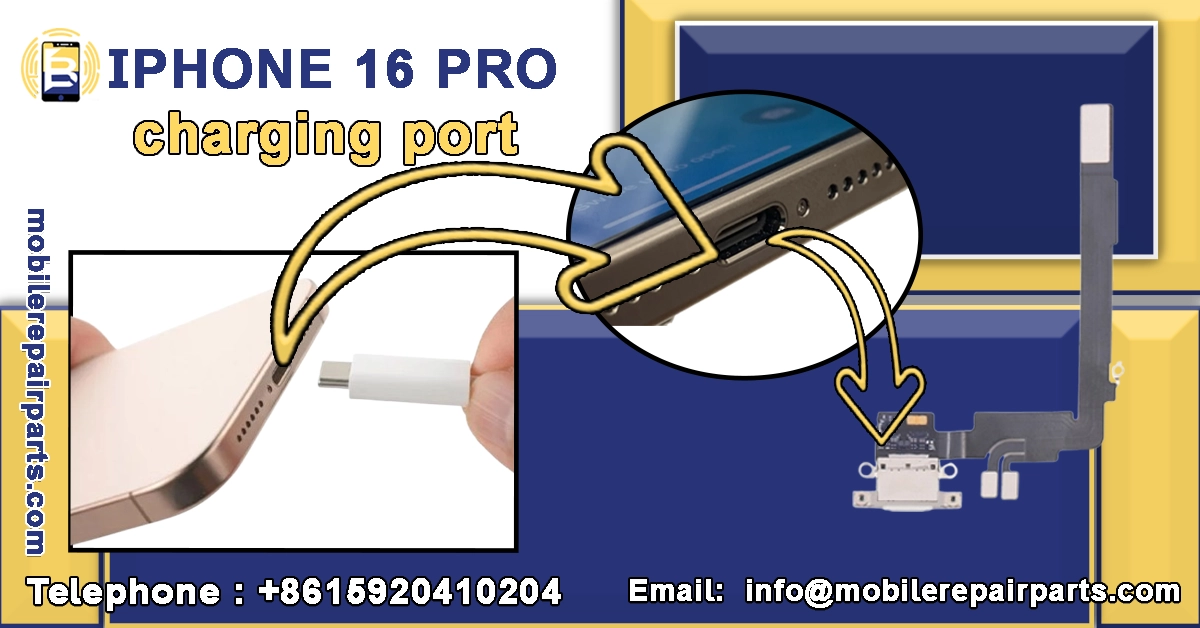
- Visual Class-2/3 criteria (IPC-A-610) – reject if gold-plated USB-C contacts show pitting, scratches > 25 μm or contamination rings; use 200× digital microscopes linked to AOI for 100 % coverage.
- Pin-height & deflection gauges – maximum allowable offset is ≤ 0.05 mm across the 24-pin field per the USB-IF Connector & Cable Compliance Doc v2.3.
- Continuity / short-test harness – 40 V, 0.1 Ω threshold; fail on open circuits or cross-shorts between CC1/CC2.
- 100 N peel-strength on solder-tails to verify port retention under rough disconnects; procedure follows Würth Elektronik USB-C production guide.
- Dynamic flex tests – bend cable 90 ° ±15 ° at 15 cycles min⁻¹ for 10 000 cycles (IEC 60966-1 “tick-tock”). Accept if no open/short and ΔR < 10 mΩ.
- Cleanliness confirmation – fibre-optic probes (Anritsu G0382A) flag debris > 1 μm on mating faces before final pack-out.
Charging-Performance, Thermal & Cycle-Life Stress Tests
-
45 W Wired Profile
- Charge 0 → 60 % at PD 9 V/5 A (EPR SPR) while logging current every 100 ms; expect 42–45 W for ≈60 s before taper to 30 W.
- Fail if time-above-40 °C on cell surface exceeds 5 min or skin temp tops 48 °C (Tom’s procedure).
-
25 W Qi2 Wireless
- Align pad–phone magnets to ≤0.5 mm z-offset; record coil ΔR after 10 k placement cycles; limit rise to ≤ 20 mΩ.
- Verify FOD shuts down at 8 W when a foreign metal shim is inserted.
-
Cycle-Life Matrix
| Test | Cycles | Temp | Pass / Fail Gate |
|---|---|---|---|
| Standard CC/CV (1 C) | 1,000 | 25 °C | Capacity ≥ 80% |
| Accelerated (1 C) | 500 | 45 °C | Capacity ≥ 80% |
| 45 W pulse | 300 | 25 °C | No swelling; IR ≤ 150% base |
-
Battery cyclers from Neware & Chroma support 4 × 120 ch racks with 2 mV logging resolution.
-
Thermal-Runaway Safety
- Heat-ramp the pack 5 °C min⁻¹ to 150 °C in inert box; must vent without fire.
- Post-run impedance check (ΔZ < 3 mΩ) ensures no latent separator damage.
-
User-facing behaviour – confirm iOS “Optimised Battery Charging” holds SoC at 80 % during overnight tests and resumes at user wake-time.
-
Benchmark validation – cross-check lab curves against PhoneArena’s public 0–100 % timings (≈94 min on 45 W).
Factory Vetting, Audit & MFi-Chip Validation
Apple will not release MFi connectors or its AID-v3 authentication IC until a plant passes its Supplier Evaluation (SEQ) audit and signs the Supplier Code of Conduct. The audit covers labour, EHS, and ERP traceability; it is repeated every three years under §11.5 of the MFi licence. Apple appoints third-party teams (often Deloitte) to run on-site “MFi system audits” that verify secure storage of keys and the ability to lock out rejected serials at the re-flashing station. Only factories—not traders—may hold a manufacturing licence, and Apple publishes the active licensee list for brand checks.
During certification, each plant must ship two fully-functional benches to Apple; engineers run a full protocol suite (USB-PD 3.1, iAP2, Bluetooth, Siri) and verify that the AID returns valid ECC signatures—especially for critical components like the iPhone 16 Pro charging port. If the IC fails, iOS devices fall back to 5 V and flag a “This accessory is not supported” alert. USB-IF’s own Type-C Authentication spec layers an X.509 certificate atop the Apple AID, so passing both bodies’ tests provides dual attestation against clone silicon. Post-launch, random lot pulls must still echo the “production-ready self-certification” file kept on Apple’s MFi portal, or the licence can be frozen in 48 h.
Serialisation & Counterfeit-Prevention Workflow
Every charger, cable, and MagSafe pad ships with a GS1 Digital Link QR code encoding the AID ID plus a 6-digit checksum. Scanning routes to a public “auth” page and a private API; logistics partners ping the private API at each scan so any duplicate serial lights up instantly. Apple hashes the same data into an ERC-721 NFT ledger that locks the serial to its first activated iPhone and records custody transfers immutably. This matters especially for premium accessories bundled with high-end devices like the iPhone 16 Pro front selfie camera 12 MP and the iPhone 16 Pro rear camera wide periscope telephoto ultrawide, where counterfeit parts could degrade user experience and brand trust.
The value is real: CBP seized 373,000 fake Apple chargers in Houston in May 2025 after Apple’s brand-protection team rejected their serial list. Because distributors can still be spoofed, cartons also carry tamper-evident void tape with the shipment’s master NFT hash printed in human-readable form; any mismatch triggers inbound QC quarantine.
Sample Runs, Escrow Milestones & Third-Party QC Reports
Golden sample approval is non-negotiable: a pre-production cable set becomes the yardstick for colour, pull-force, and DC-resistance; any PPV lot that drifts beyond the golden-sample limits is reworked or scrapped. During the first pilot-run (≈500 pcs) Apple withholds 10 % of the PO value in a milestone escrow; funds release only after Intertek issues a “PASS” PSI report that benchmarks the lot against the golden sample. Intertek and SGS offer in-line inspections, capacity audits, and load-supervision; their reports are uploaded to Apple’s SpecDIRECT portal and become part of the plant’s ongoing scorecard. QA procedure calls for:
- Initial Production Inspection (IPI): 5 % of units before potting, catching mould-flash or pin skew early.
- During Production (DUPRO): 80 pcs per MIL-STD-105E Level II sample plan once solder reflow is dialled in.
- Pre-Shipment (PSI): AQL 0/2.5/4.0 with hi-pot, IR drop and 100% visual against the approved limit samples.
- Container Loading (LS): Inspector seals the container and uploads GEO-tagged photos to Apple’s PLM within one hour.
Financial & Risk Controls
Successfully managing cross-border shipments of high-value electronics in Latin America demands strict oversight of fiscal exposure, transactional risk, and physical asset protection. Below is a strategic framework for controlling costs and mitigating operational risks across Brazil, Mexico, and Colombia.

Latin-American and Iberian Duty & VAT Snapshot (Brazil, Mexico, Colombia, Spain, Portugal)
Import duties and indirect taxes (such as VAT) represent a substantial cost factor in both Latin America and parts of Europe. These costs vary widely by country, especially for imported consumer electronics:
-
Brazil imposes multiple layered taxes on imported goods, including Import Duty (II), Industrialized Products Tax (IPI), PIS/COFINS, and state-level ICMS. The cumulative tax burden on consumer electronics can exceed 60–70% of the CIF value, depending on product classification and the state of entry.
-
Mexico generally applies a General Import Tax (IGI) plus 16% VAT on electronics. However, exemptions may apply for goods imported under trade agreements such as USMCA. Proper tariff classification and NOM certification are required for customs clearance.
-
Colombia levies a 5–15% import duty on electronics, along with a 19% VAT. Importers must be registered with DIAN (the Colombian Tax and Customs Authority) and provide complete documentation for customs valuation.
-
Spain, as an EU member, applies customs duties based on product type and origin, typically ranging from 0% to 17%, along with a standard 21% VAT. VAT is calculated on the CIF value plus applicable customs duties. Businesses may benefit from mechanisms like VAT deferment, inward processing relief, and temporary importation exemptions. Proper CN classification and, in some cases, Binding Tariff Information (BTI) are required.
-
Portugal also applies EU-standard import duties based on CIF value, with a standard VAT rate of 23%. Reduced rates of 13% or 6% may apply to certain goods. VAT registration is mandatory for non-resident importers, and compliance with local invoicing and reporting rules is required. Importers may benefit from exemptions under EU trade agreements and simplified schemes for low-value shipments.
Note: Tax rates and regulations vary based on product classification, country of origin, and local rules. Importers should verify specific requirements to ensure compliance and accurate cost estimation.
Currency Hedging, Forward Contracts & L/C Terms
Due to the volatility of Latin American currencies — especially the Brazilian real (BRL) and Colombian peso (COP) — exposure to FX risk must be hedged at both procurement and receivables levels.
- Forward Contracts allow fixed-rate locking for 30–180 days, aligning with shipment and invoicing cycles.
- Natural Hedging (e.g., sourcing locally in BRL or COP where revenues are also collected in local currency) should be used wherever possible.
- Letters of Credit (L/Cs) are advisable for larger B2B transactions in markets with payment risk. Irrevocable, confirmed L/Cs with structured terms for freight-on-board (FOB) or delivered duty paid (DDP) milestones mitigate default or delay issues.
Cargo Insurance for High-Value Electronics (All-Risk, Warehouse-to-Warehouse)
Shipping premium electronics across Latin America entails unique logistics risks, including theft, handling damage, and environmental exposure — especially during last-mile or in-port delays.
- All-Risk Insurance should be secured from origin to final destination (warehouse-to-warehouse), with clear coverage for transshipment, temporary storage, and cross-docking events.
- Consider Named Peril Extensions for regions with elevated theft risk (e.g., São Paulo, Bogotá outskirts), and require security-conformant 3PLs or bonded carriers.
- Ensure alignment between the Declared Invoice Value, policy terms, and Incoterms (e.g., DAP vs. CIF), to avoid underinsurance or dispute in case of loss.
After-Sales & Environmental Obligations
Post-sale performance is a major driver of customer loyalty and brand perception, especially in the accessories segment where durability and compatibility expectations are high. Regional regulations also impose growing environmental accountability on manufacturers and distributors, particularly for small electronics and e-waste streams.
Apple Worldwide Warranty for Chargers, Cables & MagSafe Pads
Apple’s global limited warranty for accessories — including USB-C power adapters, charging cables, and MagSafe pads — typically covers manufacturing defects for one year from date of purchase, contingent on proof of purchase and serial number validation.
In Latin America, enforcing this warranty requires careful alignment with:
- Local consumer protection laws (e.g., Brazil’s Consumer Defense Code mandates a minimum 90-day warranty, with extended timelines in certain retail conditions).
- Authorized service networks capable of processing returns and validating eligibility.
- Clear multilingual documentation at the point of sale to reduce friction in warranty claims.
Reverse Logistics & RMA Flow Design for Defective Charging Parts
Efficient return flows for defective accessories are essential to controlling operational costs, maintaining customer satisfaction, and complying with environmental mandates.
Best practices for Latin America include:
- Localized RMA hubs in Mexico City, São Paulo, and Bogotá to consolidate returns regionally before shipment to a central test/repair facility or authorized recycler.
- Tiered triage processes, distinguishing high-volume, low-cost items (e.g., cables) from higher-value components (e.g., MagSafe pads), reducing unnecessary freight.
- Integrated CRM and warranty systems to match product serials with purchase records and expedite pre-authorization.
E-Waste Compliance: Mexico NOM-161, Brazil PNRS Collection Schemes
Compliance with environmental regulations is no longer optional — and accessories, due to their material complexity and short life cycles, are increasingly targeted by enforcement efforts.
- Mexico (NOM-161-SEMARNAT-2011): Requires producers and importers to implement management plans for electronics at end-of-life. While small accessories often fall under simplified thresholds, bundled take-back or voluntary compliance schemes are recommended for reputational protection.
- Brazil (PNRS - Política Nacional de Resíduos Sólidos): Mandates reverse logistics programs for electronics, with growing enforcement at the state level. Retailers and importers must provide collection points or partner with authorized handlers.
- Colombia follows the REI (Residuos de Aparatos Eléctricos y Electrónicos) framework, requiring manufacturers/importers to report on volumes and demonstrate collection/recycling pathways.
Commercial Bundling & Market Strategy
Bundling high-performance accessories with device sales or as standalone value packs can significantly increase basket size, reduce friction in the iPhone 16 Pro charging experience, and anchor brand perception — especially in cost-sensitive or Android-dominant markets.
Value-Pack Accessories: 30 W Blocks, USB-C to USB-C Cables, 25 W MagSafe Pads
Market-ready bundles should balance performance, universality, and perceived value:
- 30W USB-C Power Blocks: Serve a broad range of iPhone, iPad, and Android fast-charging needs, ideal for premium positioning.
- USB-C to USB-C Cables: Ensure cross-platform compatibility, futureproofing the offering as more devices drop legacy connectors.
- 25W MagSafe Pads: Target high-end iOS users, especially when paired with MFI-certified third-party accessories.
Marketing Angles Around Battery-Life Preservation & Fast-Charge Convenience
Messaging should shift from generic “fast charging” claims to lifestyle-enhancing narratives that resonate with local consumer behavior:
- “Charge 50% in 30 Minutes – Get Back to Life Faster”
- “Power That Protects: Preserve Battery Health with Certified Charging”
- “One Charger, All Your Devices – Less Clutter, More Power”
Eco-conscious angles — such as "Buy Once, Charge for Years" or “Reduced E-Waste Through Durable Accessories” — are especially compelling in urban centers like São Paulo, Mexico City, and Bogotá where environmental awareness is rising.
FAQ iPhone 16 Pro Charging
Read also:
- Selecting iPhone 16 Pro Camera Supplier
- iPhone 16 Pro Max Battery Bulk Buying Guide 2025
- iPhone 16 Pro Max Screen Wholesale
- Top 10 Common iPhone Questions Simple and Clear Answers
- iPhone 16 Revealed: What Makes It Stand Out?
- iPhone XR in 2025
- Apple iPhone 15 vs. iPhone 15 Pro
The iPhone 16 Pro charging system—featuring advanced 45 W USB-C & 25 W MagSafe capabilities—opens a significant profit window for Latin American wholesalers, as the region’s smartphone market reached 137 million units in 2024. However, capitalizing on this demand requires flawless execution: accurate tariff classification (HS 8517.12, 8544.42, 8504.40), verified Apple MFi certification, and full compliance with CE, FCC, and Brazil’s updated ANATEL Act 5155. ICAO 2026 (effective 1 Jan) elevates UN 3481 SoC cap to 25 % and demands 4 m stack test—book air cargo before December to beat the rush.
Winning in this ecosystem means treating regulatory precision and supply chain control as core competencies. Disciplined wholesalers will hedge against BRL/USD volatility, verify serialized MFi components, and meet Apple’s stringent factory audit and QC benchmarks. Those who align iPhone 16 Pro charging performance with local compliance—from EU pack-out to Latin American port clearance—will dominate shelf space and avoid costly disruptions. In a market moving this fast, paperwork is profit protection.
Latin America’s 137 million-unit smartphone boom makes iPhone 16 Pro 45 W chargers hot inventory—if you clear HS codes, MFi certs, and UN 3481 air rules flawlessly.
Wholesalers who lock 30 W+ adapters, hedge BRL/USD swings, and upload serialised QR codes within 24 h post-QC will own shelf space and margin.