

BETA Electronic Co LTD

BETA Electronic Co LTD

BETA Electronic Co LTD

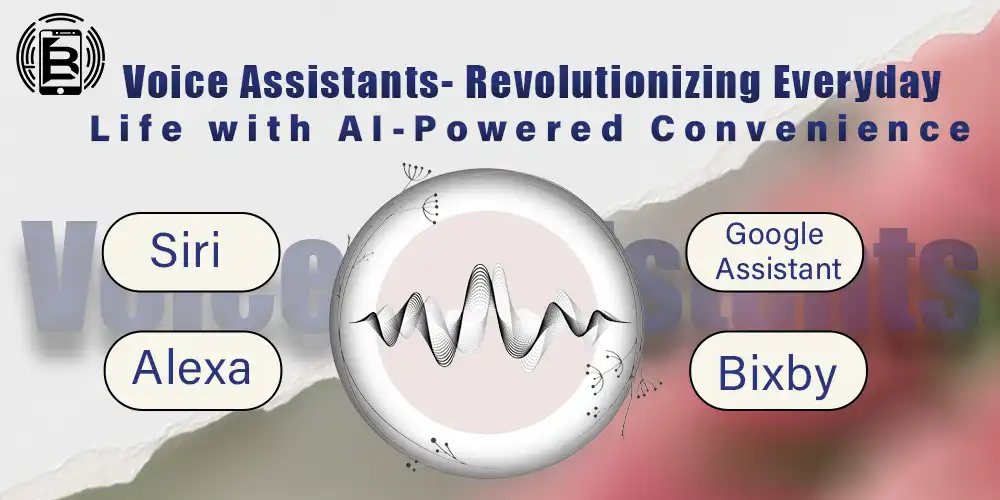
Voice Assistants-Revolutionizing Everyday Life with AI-Powered Convenience


In the age of modern technology, voice assistants are one of the most important technologies in our daily lives as we can control everything with our voice to make our lives easier and more comfortable Whether you use your smartphone, tablet, or smart speaker at home, a voice assistant is a tool that enables you to do many tasks quickly and easily by providing voice commands to the voice assistant. Through this article, we will learn about of voice assistants, their working mechanism, and the types of phones that support voice assistants .

The concept of a voice assistant:

A voice assistant is an intelligent program designed to understand and respond to natural language through voice. It is a tool that allows users to control their devices and perform tasks easily by verbally directing these commands to the voice assistant, which in turn interprets and executes them, for example, setting alarms, playing music, searching the internet, as well as controlling smart devices within the home through the home ai assistant.

How the voice assistant works:

The voice assistant works through a series of processes, where the voice assistant first recognizes the voice by recording the sound and converting it into a digital signal, and then it analyzes these signals through certain algorithms and converts them into written text, in addition to its ability to recognize different accents and arrange words correctly. After the voice is converted into text, the voice assistant uses natural language processing techniques to interpret and understand the intended meaning of the request. The third step is information retrieval and command execution, where the voice assistant searches for relevant information, and this search may be in a local database or online, for example, if we want to ask about the weather, the assistant will search for weather information in our current location and will retrieve the required information and generate the answer. The last step is the answer generation process. Based on the information found, the assistant generates an appropriate response, which can be text, voice, or an action.

Technologies used in voice assistants:

Artificial neural networks:
These are computational models inspired by the structure of the human brain, consisting of simple units called neurons, which are linked together to form a network capable of learning from and adapting to data and recognizing images, sounds, and text, making them a powerful tool in the fields of artificial intelligence. Neural networks play an important role to make voice assistants work efficiently, through speech recognition and speaker recognition where neural networks can distinguish the voices of different people, allowing the assistant to customize responses for each user. Neural networks understand and generate natural language by formulating responses and machine translation, where neural networks can translate text from one language to another.
Machine learning:
Machine learning is a branch of AI that enables systems to learn from and adapt to data without resorting to explicit programming where algorithms are trained on large amounts of data to learn patterns and make decisions. Machine learning plays an important role in making voice assistants more intelligent and capable of understanding and meeting the needs of users.
Digital Signal Processing:
It is mainly used to convert audio into interpretable and responsive information.
The signal processing process in a voice assistant is divided into several stages, the most important of which are:
1. Sound Capture (Recording): Microphones are used to capture sound from the environment and are often built into smart devices.
2. Sound purification: Noise is removed from the voice and the voice is recognized, where techniques such as filtering sound frequencies are used to distinguish and focus on the frequencies that belong to human speech.
3. Speech recognition: In this stage, the audio is converted into text using speech recognition techniques (ASR).
This technique relies on machine learning models that have been pre-trained on a huge set of audio and text data.
4. Natural Language Processing (NLP):
Text is analyzed using natural language processing techniques to understand the user's intent.
5. Interaction and response: After interpreting the request, the smart voice assistant processes and responds to it based on the database or connection to online servers This response may be in the form of text or voice, depending on the type of voice assistant (e.g. Siri, Google Assistant, Alexa).

Types of AI voice assistants:

Voice assistants vary widely and are categorized based on several criteria, including:
• Scope of use: Apple's Siri and Amazon's Alexa are designed for personal use because they enable the user to perform various tasks such as sending messages, answering questions, and playing music. Commercial voice assistants are designed to be customized for business and corporate environments to facilitate administrative tasks, such as scheduling appointments. In addition to voice assistants that specialize in specific tasks such as healthcare or education, where they can provide specific information and perform specialized tasks.
• The second criterion is based on the method of interaction, where voice assistants can be divided into command-based assistants that receive specific commands from the user and execute them, and dialog-based assistants where they can conduct open dialog with the user.
• The third criterion is based on the level of intelligence, where voice assistants can be divided into rule-based assistants, which are assistants that use a set of rules to generate a response and execute tasks. Machine learning-based assistants that use machine learning algorithms to generate the response and understand natural language better.
• The fourth and final criterion is based on the hardware you're working on: There are voice assistants that work on smart devices such as Siri and Alexa. There are voice assistants that work with smart speakers like Amazon Echo and Google Home. There are voice assistants that work with built-in car infotainment systems, such as the voice assistant in Tesla cars.

Examples of common voice assistants:

Siri, Alexa, Google Assistant,Bixby

Information about the Siri voice assistant:

Siri is an intelligent voice assistant developed by Apple and available on iPhones from the version where Siri was first launched, iPhone 4S, to the latest iPhone 16 pro max models, and is also available on iPads and Macs. It provides an intuitive user experience by understanding and accurately executing voice commands.

About the Alexa voice assistant:

Alexa is a smart voice assistant developed by Amazon. Alexa is the world's most popular voice assistant and is available on a wide range of smart speakers such as the Amazon Echo, and other compatible devices It is easy to use as the device starts listening to your request as soon as you say “Alexa” and analyzes it and provides an appropriate response.
There are several Amazon devices that support Alexa such as: Amazon Echo, Fire TV, Fire Tablet

Information about the voice assistant Google Assistant:

Google Assistant is an intelligent voice assistant developed by Google.Google Google Assistant aims to make a user's life easier by understanding and executing their voice commands through voice recognition, natural language understanding, database search, and response generation. Google Assistant is available in smartphones Android phones such as the Pixel series of phones, OnePlus phones, Xiaomi phones such as Xiaomi 14T Pro, and most recent Samsung phones such as samsung galaxy s25 ultra that Google Assistant, in addition to Bixby Assistant and some iPhones, where the Google Assistant application can be downloaded from the App Store and used.
Smart speakers such as Google Home and Nest Hub. Smartwatches such as Wear OS watches. Other compatible devices such as some cars and televisions.

Information about the Bixby voice assistant:

Bixby is an intelligent voice assistant developed by Samsung. Bixby is designed to help users interact with their devices, answer questions, control smart home devices, and recognize their images and voices. Bixby works seamlessly with most modern Samsung smartphones.
It can be accessed by pressing the dedicated Bixby button or by saying “Hey Bixby”.

In conclusion, it can be said that voice assistants have become an essential part of our daily lives as they can be relied upon to fulfill our needs quickly and easily and have contributed to improving and simplifying our daily lives. However, voice assistants are tools and should be used wisely and not relied upon completely. Live human interaction is irreplaceable.
Do you expect this field to evolve further in the future? Share your thoughts and feel free to ask any questions you may have in the comments section.
Leave a Reply

Your email address will not be published. Required fields are marked *


In the age of modern technology, voice assistants are one of the most important technologies in our daily lives as we can control everything with our voice to make our lives easier and more comfortable Whether you use your smartphone, tablet, or smart speaker at home, a voice assistant is a tool that enables you to do many tasks quickly and easily by providing voice commands to the voice assistant. Through this article, we will learn about of voice assistants, their working mechanism, and the types of phones that support voice assistants .

The concept of a voice assistant:

A voice assistant is an intelligent program designed to understand and respond to natural language through voice. It is a tool that allows users to control their devices and perform tasks easily by verbally directing these commands to the voice assistant, which in turn interprets and executes them, for example, setting alarms, playing music, searching the internet, as well as controlling smart devices within the home through the home ai assistant.

How the voice assistant works:

The voice assistant works through a series of processes, where the voice assistant first recognizes the voice by recording the sound and converting it into a digital signal, and then it analyzes these signals through certain algorithms and converts them into written text, in addition to its ability to recognize different accents and arrange words correctly. After the voice is converted into text, the voice assistant uses natural language processing techniques to interpret and understand the intended meaning of the request. The third step is information retrieval and command execution, where the voice assistant searches for relevant information, and this search may be in a local database or online, for example, if we want to ask about the weather, the assistant will search for weather information in our current location and will retrieve the required information and generate the answer. The last step is the answer generation process. Based on the information found, the assistant generates an appropriate response, which can be text, voice, or an action.

Technologies used in voice assistants:

Artificial neural networks:
These are computational models inspired by the structure of the human brain, consisting of simple units called neurons, which are linked together to form a network capable of learning from and adapting to data and recognizing images, sounds, and text, making them a powerful tool in the fields of artificial intelligence. Neural networks play an important role to make voice assistants work efficiently, through speech recognition and speaker recognition where neural networks can distinguish the voices of different people, allowing the assistant to customize responses for each user. Neural networks understand and generate natural language by formulating responses and machine translation, where neural networks can translate text from one language to another.
Machine learning:
Machine learning is a branch of AI that enables systems to learn from and adapt to data without resorting to explicit programming where algorithms are trained on large amounts of data to learn patterns and make decisions. Machine learning plays an important role in making voice assistants more intelligent and capable of understanding and meeting the needs of users.
Digital Signal Processing:
It is mainly used to convert audio into interpretable and responsive information.
The signal processing process in a voice assistant is divided into several stages, the most important of which are:
1. Sound Capture (Recording): Microphones are used to capture sound from the environment and are often built into smart devices.
2. Sound purification: Noise is removed from the voice and the voice is recognized, where techniques such as filtering sound frequencies are used to distinguish and focus on the frequencies that belong to human speech.
3. Speech recognition: In this stage, the audio is converted into text using speech recognition techniques (ASR).
This technique relies on machine learning models that have been pre-trained on a huge set of audio and text data.
4. Natural Language Processing (NLP):
Text is analyzed using natural language processing techniques to understand the user's intent.
5. Interaction and response: After interpreting the request, the smart voice assistant processes and responds to it based on the database or connection to online servers This response may be in the form of text or voice, depending on the type of voice assistant (e.g. Siri, Google Assistant, Alexa).

Types of AI voice assistants:

Voice assistants vary widely and are categorized based on several criteria, including:
• Scope of use: Apple's Siri and Amazon's Alexa are designed for personal use because they enable the user to perform various tasks such as sending messages, answering questions, and playing music. Commercial voice assistants are designed to be customized for business and corporate environments to facilitate administrative tasks, such as scheduling appointments. In addition to voice assistants that specialize in specific tasks such as healthcare or education, where they can provide specific information and perform specialized tasks.
• The second criterion is based on the method of interaction, where voice assistants can be divided into command-based assistants that receive specific commands from the user and execute them, and dialog-based assistants where they can conduct open dialog with the user.
• The third criterion is based on the level of intelligence, where voice assistants can be divided into rule-based assistants, which are assistants that use a set of rules to generate a response and execute tasks. Machine learning-based assistants that use machine learning algorithms to generate the response and understand natural language better.
• The fourth and final criterion is based on the hardware you're working on: There are voice assistants that work on smart devices such as Siri and Alexa. There are voice assistants that work with smart speakers like Amazon Echo and Google Home. There are voice assistants that work with built-in car infotainment systems, such as the voice assistant in Tesla cars.

Examples of common voice assistants:

Siri, Alexa, Google Assistant,Bixby

Information about the Siri voice assistant:

Siri is an intelligent voice assistant developed by Apple and available on iPhones from the version where Siri was first launched, iPhone 4S, to the latest iPhone 16 pro max models, and is also available on iPads and Macs. It provides an intuitive user experience by understanding and accurately executing voice commands.

About the Alexa voice assistant:

Alexa is a smart voice assistant developed by Amazon. Alexa is the world's most popular voice assistant and is available on a wide range of smart speakers such as the Amazon Echo, and other compatible devices It is easy to use as the device starts listening to your request as soon as you say “Alexa” and analyzes it and provides an appropriate response.
There are several Amazon devices that support Alexa such as: Amazon Echo, Fire TV, Fire Tablet

Information about the voice assistant Google Assistant:

Google Assistant is an intelligent voice assistant developed by Google.Google Google Assistant aims to make a user's life easier by understanding and executing their voice commands through voice recognition, natural language understanding, database search, and response generation. Google Assistant is available in smartphones Android phones such as the Pixel series of phones, OnePlus phones, Xiaomi phones such as Xiaomi 14T Pro, and most recent Samsung phones such as samsung galaxy s25 ultra that Google Assistant, in addition to Bixby Assistant and some iPhones, where the Google Assistant application can be downloaded from the App Store and used.
Smart speakers such as Google Home and Nest Hub. Smartwatches such as Wear OS watches. Other compatible devices such as some cars and televisions.

Information about the Bixby voice assistant:

Bixby is an intelligent voice assistant developed by Samsung. Bixby is designed to help users interact with their devices, answer questions, control smart home devices, and recognize their images and voices. Bixby works seamlessly with most modern Samsung smartphones.
It can be accessed by pressing the dedicated Bixby button or by saying “Hey Bixby”.

In conclusion, it can be said that voice assistants have become an essential part of our daily lives as they can be relied upon to fulfill our needs quickly and easily and have contributed to improving and simplifying our daily lives. However, voice assistants are tools and should be used wisely and not relied upon completely. Live human interaction is irreplaceable.
Do you expect this field to evolve further in the future? Share your thoughts and feel free to ask any questions you may have in the comments section.
Leave a Reply

Your email address will not be published. Required fields are marked *


Products

Voice Assistants-Revolutionizing Everyday Life with AI-Powered Convenience
This website uses cookies to improve your experience. By using this website you agree to our Data Protection Policy.
Read more