


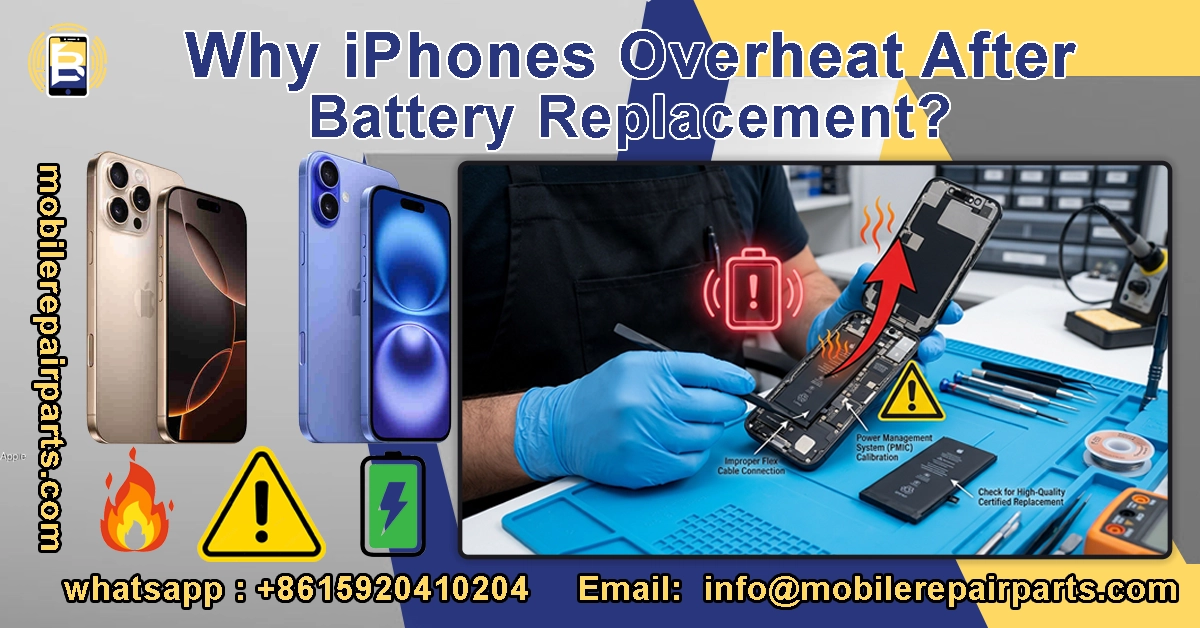
iPhone Battery Replacement is one of the most common repairs performed by mobile phone technicians worldwide. An iPhone may overheat after a battery replacement due to three primary factors: low-quality replacement batteries, improper installation, or incorrect battery calibration within iOS. However, many repair shops and wholesalers importing parts from China still face this issue after completing an iPhone Battery Replacement. Understanding the technical reasons behind overheating is essential for repair professionals in Latin America and for wholesalers who supply high-quality replacement batteries.
In this guide, we will explain the real causes of overheating after iPhone Battery Replacement, how battery quality affects performance, and what wholesalers and technicians should check to prevent overheating problems.
|
📘 Summary Understanding why iPhones overheat after battery replacement is essential for maintenance technicians and wholesalers in Latin America. This guide explains the technical reasons behind the problem, the impact of battery quality on performance, and the importance of proper battery installation and protection to avoid thermal failures. It also provides practical steps for calibrating the battery and improving internal cooling, helping to reduce complaints and increase customer satisfaction. |
🔍 Key Highlights
|
Table of Contents
Why iPhones Overheat After Battery Replacement?
Overheating after iPhone battery replacement isn’t always a single-fault issue; it’s often a mix of hardware quality and technical execution. Understanding these root causes is essential for wholesalers to ensure product reliability and reduce return rates.
Common Causes of Overheating:
- Substandard Battery Cells: Low-quality or incompatible aftermarket cells often fail to manage thermal loads.
- Missing Protection ICs: Lack of high-quality Integrated Circuits (IC) leads to unstable voltage and heat spikes.
- Poor Calibration: Failure to calibrate the phone after an iPhone battery replacement can cause the system to overwork the new cell.
- Technical Errors: Improper installation or poor heat dissipation due to missing thermal adhesives.
- For businesses importing from China, sourcing batteries with certified protection boards is the best way to prevent overheating issues and maintain customer trust.
How Does Battery Quality Impact iPhone Battery Replacement?
The success of any iPhone battery replacement depends primarily on the grade of the replacement unit. In the global spare parts market, batteries are categorized into three main levels, each offering different thermal stability and electrical performance:
- OEM batteries extracted batteries:
Original spare parts extracted from original phones. They offer the highest degree of compatibility and maintain the highest phone performance standards, ensuring the same safety levels as a new phone from the factory. - High-quality aftermarket batteries:
These batteries are designed to meet original specifications and use high-quality cells and integrated protection circuits. For wholesalers, this category represents the best balance between cost and reliable performance. - Low-cost generic batteries:
These batteries are often the root cause of overheating and shortened battery life, as they lack essential safety components. Using them to replace an iPhone battery may result in “service” messages, poor heat dissipation, and customer dissatisfaction.
Read Also: Apple iPhone 17 Battery Wholesale from China.
Why does protection IC design matter in iPhone battery replacement?
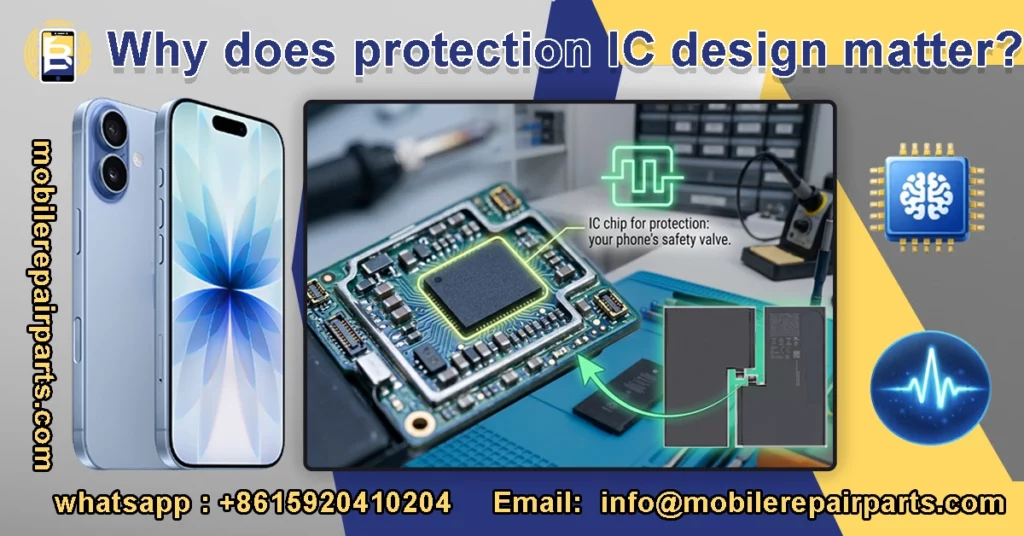
The Protection Circuit Module (BMS) or battery management IC directly affects overheating risk because it regulates charging current, voltage stability, and internal temperature monitoring. It is also responsible for regulating the following vital processes:
- Charging current: to ensure safe energy flow.
- Over-discharge protection: to maintain cell efficiency.
- Temperature monitoring: To prevent thermal runaway.
- Voltage stability: To ensure the phone works without sudden shutdowns.
When performing an iPhone Battery Replacement using batteries with inferior ICs, the phone is more likely to experience unstable voltage, excessive current draw, or sudden heat spikes.
Can Poor Installation Cause Overheating After iPhone Battery Replacement?
Yes. Even when using the highest quality batteries, any error in performing an iPhone battery replacement can lead to serious technical and thermal issues.
Common installation errors that cause overheating
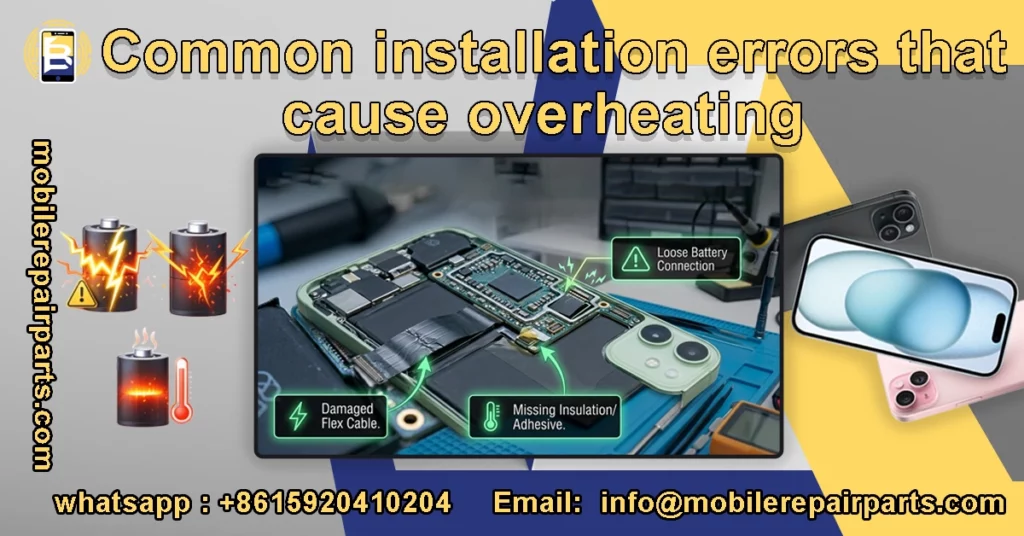
- Loose battery connection: An incomplete connection leads to high electrical resistance and heat generation at the contact point.
- Damage to the flex cable: Any sharp bend or minor scratch during repair may cause short circuits.
- Misaligned battery placement: Uneven pressure inside the phone causes heat to build up in specific areas.
- Neglecting insulation and adhesive materials: The absence of insulation tape or incorrect placement of adhesive hinders natural heat dissipation inside the iPhone.
You May Also Like: iPhone 17 Pro Max Battery Wholesale.
Why is it important to calibrate the battery after replacing an iPhone battery?
Battery calibration is an essential step that must be completed for the repair to be successful. Without proper calibration, iOS may fail to read true power levels, resulting in erratic charging behavior.
Risks of neglecting calibration
- Misleading readings: Inaccurate battery charge percentage displayed.
- Sudden shutdown: Mobile phone turns off despite visible charge percentage.
- High thermal stress: Mobile phone overheats during charging due to poor power flow regulation.
Steps to calibrate the system after replacing the iPhone battery

To ensure that the system accurately recognizes the full capacity after iPhone Battery Replacement, it is recommended to follow these steps:
- Full charge: Charge the phone until it reaches 100%.
- Full discharge: Let the battery discharge completely until the phone turns off (reaches 0%).
- Full cycle: Recharge the phone again to maximum capacity without interruption.
- Repetition: It is preferable to repeat this cycle once or twice to ensure the stability of the “battery chemistry” with the system.
Learn More: iPhone 11 Battery Bulk.
How Does Heat Dissipation Affect iPhone Battery Replacement Results?
Apple relies on precise internal engineering to manage heat in its phones. During the iPhone Battery Replacement process, even a slight change in battery thickness or position can disrupt the efficiency of the internal cooling system.
Reasons for poor heat dissipation after repair
Poor heat dissipation after an iPhone battery replacement usually occurs when the internal thermal design of the device is disrupted. The most common reasons include:
- Thickness of commercial batteries: Aftermarket batteries may be slightly thicker than OEM specifications, reducing the space needed for airflow and heat distribution.
- Blocked heat spreaders: Using inappropriate adhesives or applying them incorrectly can insulate the heat spreaders and prevent them from functioning properly.
- Component interference: Even a slight shift in the battery’s position can put pressure on adjacent components, trapping heat in confined areas.
The following table summarizes the most common thermal issues that technicians may encounter after an iPhone battery replacement, along with the recommended technical procedures to address them:
| Problem | Recommended Technician Check |
|---|---|
| Low-Quality Battery | Replace with a certified high-quality aftermarket battery. |
| Faulty Protection IC | Test for battery voltage stability and current regulation. |
| Incorrect Installation | Inspect and reseat the battery connector for a firm fit. |
| Missing Insulation | Reapply thermal or insulation tape to prevent heat buildup. |
| Calibration Issues | Perform a full charge/discharge cycle (battery calibration). |
| Logic Board Heat | Check for high CPU load or background app interference. |
Explore More:
- iPhone 14 Plus Battery Ultimate Guide for Latin American.
- iOS 18 Battery Compatibility.
- iPhone 14 Pro Max Battery Bulk.
What should technicians do if an iPhone overheats after a battery replacement?
When encountering a problem of overheating after an iPhone battery replacement, technicians must follow a systematic diagnostic approach to accurately identify the malfunction and avoid damaging the phone.
Troubleshooting Steps
- Check the battery source: First, make sure that the battery comes from a reliable supplier such as BETA Electronic Co LTD, which adheres to strict quality standards, as cell quality is the decisive factor.
- Check the connector: A loose battery socket can cause unstable current, so make sure the connector is completely clean and secure.
- Measure the battery voltage: Use professional measuring tools to check the voltage levels and make sure there is no fluctuation that could cause the circuit to overheat.
- Check the quality of the installation: Make sure that the flex cables are not damaged or bent during the iPhone battery replacement process.
- Test with a replacement battery: As a final step, try another high-quality battery to see if the first battery was defective.
Don’t Miss:
Why iPhone Battery Replacement Quality Matters for Latin American Wholesalers?
In the Latin American spare parts market, your success as a supplier depends entirely on technicians’ trust in the quality of your products, especially when it comes to iPhone battery replacement. Providing poor-quality batteries means not only losing a single sale, but also losing a reputation that took years to build.
Professionals in this sector are always looking for suppliers who offer:
- Capacity stability: Real performance that matches the numbers advertised on the battery.
- Circuit safety: Protection chips that prevent technical disasters and ensure voltage stability.
- No thermal issues: Batteries that keep the device cool even with heavy use.
- Consistent quality: The quality of part number 1000 is the same as part number 1.
🚀 Supply Reliable iPhone Replacement Batteries
Repair shops and wholesalers in Latin America should prioritize certified batteries for iPhone Battery Replacement that feature stable lithium cells and high-quality protection IC circuits to prevent overheating and ensure long-term iPhone performance.
Get Your Wholesale Quote NowFAQs About iPhone Battery Replacement
How do I know if the new battery has an original protection chip (IC)?
High-quality batteries show stability in the “battery percentage” and do not cause sudden jumps in charging. Use a Battery Tester to check the voltage stability and protection circuit efficiency before completing the iPhone Battery Replacement process.
How can overheating be prevented after replacing an iPhone battery?
Overheating can be prevented after replacing an iPhone battery by using high-quality batteries, ensuring proper installation, and calibrating the battery correctly.
Why should wholesalers care about the quality of iPhone battery replacements?
To avoid returns, protect their reputation, and maintain long-term partnerships with repair shops.
Why can a phone heat up after iPhone Battery Replacement?
A phone may heat up after iPhone Battery Replacement due to poor battery quality, faulty IC protection circuits, or improper installation during the repair process.
How many times should a new battery be calibrated to ensure thermal stability?
One full cycle (100% charge then 0% discharge) is sufficient.
In conclusion, preventing overheating after an iPhone Battery Replacement depends on three critical factors: battery quality, proper protection IC design, and accurate installation procedures. When technicians follow professional repair standards and wholesalers prioritize reliable components, the risk of thermal issues drops significantly and device performance remains stable.
Wholesalers and repair professionals seeking consistent supply and technical reliability can explore a wide range of certified iPhone battery solutions through BETA Electronic Co LTD and request the latest wholesale catalog at mobilerepairparts.