


The screen in mobile phones is an essential part of daily use in terms of browsing social media, creating content, playing games, watching videos, so many users believe that the high-quality screen is available in flagship phones only, but the truth is that most mid-range phones come with excellent screens and high quality that meet the needs of the user at a modest cost, in this article we will explain Types of mobile screens and the differences between them, and the basic factors that must be considered when choosing a screen for a mid-range phone.
What are the types of screens in smartphones?
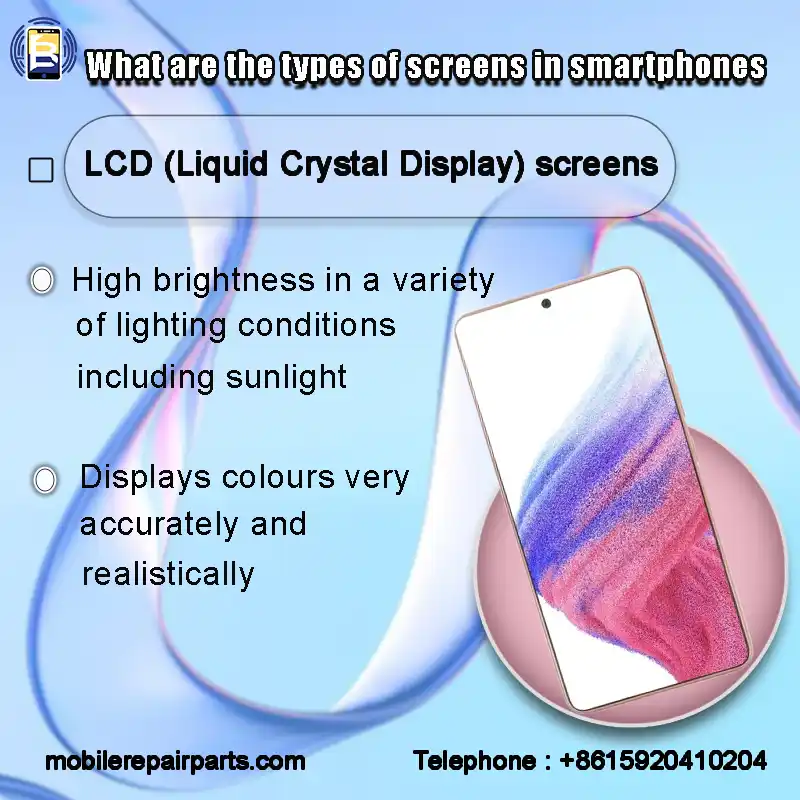
1-LCD (Liquid Crystal Display) screens:
Its features:
- High brightness in a variety of lighting conditions, including sunlight.
- Displays colours very accurately and realistically.
- Lasts for a long time without changing the quality of the display.
- Not easily affected by high temperatures.
- Lower cost than other technologies.
Disadvantages:
- Higher power consumption than OLED and AMOLED.
- Lower contrast, resulting in less vivid colours.
- Thicker than ultra-thin OLED displays.
- Some LCD screens may have a slower refresh rate, which can affect gaming and fast browsing.
-Some phones that come with an LCD screen:
- Samsung Galaxy A14, As suppliers of mobile phone parts from China to Latin America, we advise wholesalers to stock large quantities of spare parts for common phones, including the A14, and this is what our company provides you with, we also recommend that you read the following article to know the specifications of the A14, from the screen to the battery to the cameras to the processor and others, Samsung Galaxy A14 5G Rendimiento, especificaciones, ¿vale la pena comprarlo en 2025? .
- Samsung Galaxy A04e.
- Xiaomi Redmi Note 12T Pro.
- Realme C25.

2-LED (Light Emitting Diode) Displays:
Its features:
- Provides brighter colours and higher contrast than LCDs.
- High brightness levels in bright lighting conditions.
- Lower power consumption.
- Longer life compared to LCDs.
- Thinner and lighter.
- Faster response time.
Disadvantages:
- Higher price than LCDs.
- Less contrast than OLED.
- May have performance problems when exposed to excessive heat.
- Most modern phones have moved away from the traditional LED display to more advanced technologies such as OLED, AMOLED and Super AMOLED.

3-OLED (Organic Light Emitting Diode) displays:
It is one of the best technologies in monitors, characterised by
- Vibrant colours and amazing contrast.
- Consumes less power in always-on display modes and when displaying black colour.
- Accurate and wide viewing angles as it does not lose colour or accuracy when viewed from different angles, unlike some LCDs.
- Faster response time used in gaming phones as it supports high refresh rates up to 120Hz.
- Thinner and lighter design.
Disadvantages:
- Screen burn: With prolonged use, static elements (such as application icons or the clock) can leave a permanent mark on the screen, so companies are trying to minimise this with technologies such as pixel shift and always-on display.
- High price.
- Shorter pixel life.
- Lower brightness in bright light.
- Phones with an OLED display: Apple iPhone 15 Pro Max, Apple iPhone 15.

4-AMOLED (Active Matrix OLED) displays:
Features:
- Bright colours and high contrast.
- AMOLED gives you a better viewing experience from different angles as the colours and brightness don't change noticeably.
- High refresh rate up to 120Hz or 144Hz.
- It uses less power when displaying blacks or dark content, maximising battery life.
- More flexible designs that can be used in foldable phones.
- Each pixel emits its own light. This helps save power and enable thinner designs.
Disadvantages:
- AMOLED is less bright than LCD in strong lighting conditions.
- Shorter pixel life.
- High cost.
Phones that come with an AMOLED display:
Samsung Galaxy S23 Ultra, Samsung Galaxy S24+ , Xiaomi 13 Pro, Samsung Galaxy Z Fold 5 and more.
What is the difference between Original Display, Premium Display and Commercial Display?
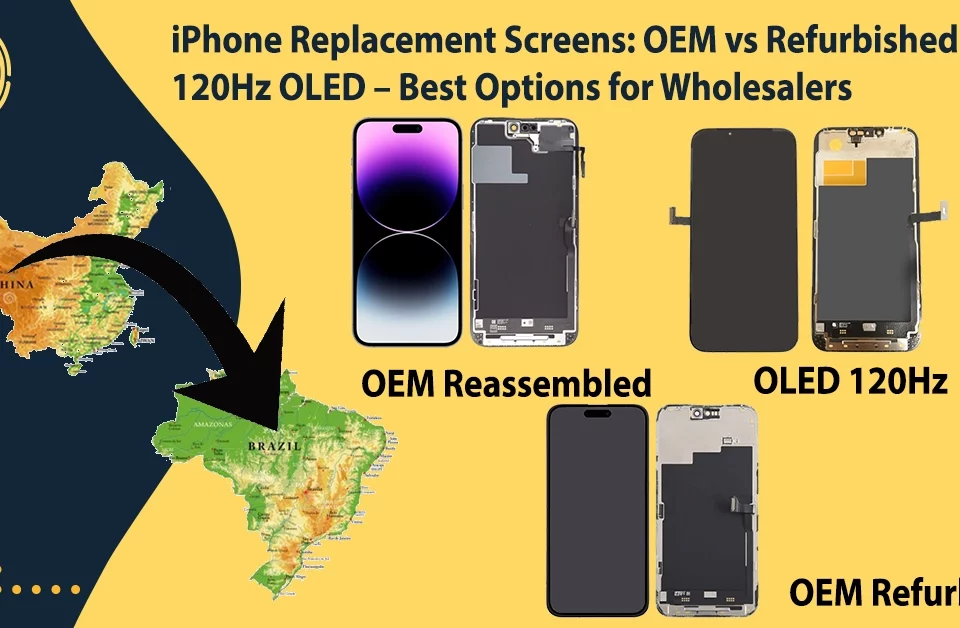
Screens are one of the most vulnerable parts of the phone and due to their importance in the daily use of phones, the user will seek to replace them, so we advise you if you are a wholesaler to store large quantities of screens to meet the needs of customers, but you should pay attention to the types of screens, there are original screens, high quality screens and traditional screens, we will explain to you the difference between these types.
1. Original screens: These are screens made by the manufacturer of the phone itself, such as Apple, Samsung or Huawei.
Features of genuine displays:
- Genuine displays offer high quality, accurate colours and deep contrast.
- Genuine screens are more resistant to shock and scratches.
- Fully interoperable with the phone's operating system, ensuring accurate touch response and smooth performance.
Disadvantages of OEM displays:
- High price.
- Genuine screens can be difficult to obtain if the phone company doesn't offer a wide range of spare parts.
2.High-quality screens: These are screens manufactured by companies other than mobile phone manufacturers. Although these screens are not original, the companies that produce them aim to provide users with screens that are very close to the original.
Features of high quality replacement screens:
- Close to original quality, bright colours and high contrast.
- Reasonable price.
- They are widely available on the market, making them easy to obtain.
Disadvantages of high quality replacement monitors:
- There may be slight differences in brightness or colour accuracy compared to the original.
- Less resistant to shocks and scratches than original screens.
At BETA Electronic Co LTD we supply wholesalers in Latin America with high quality screens and all mobile phone spare parts at competitive prices.
3.Commercial screens: These are screens that are produced in large quantities without being specifically designed for specific phones and are cheaper than alternative screens.
Features of commercial monitors:
- Very low price.
- Widely available on the market.
Disadvantages of Commercial Scanners:
- Commercial displays can have problems with color, contrast, and brightness because they don't always meet high standards.
- Commercial displays may not last as long as high-quality originals or replacements and may wear out more quickly.
- They may have compatibility issues with the device, such as touch or resolution problems.
5 key features to consider when choosing a phone screen:

1-Resolution: refers to the number of pixels that make up the image on the screen. The higher the resolution, the clearer the details and the better the display quality of the screen.
How does screen resolution affect the user experience?
The higher the resolution, the clearer the images on the screen, especially when watching high-quality video or playing games, but higher resolution screens consume more power and may require more powerful graphics processors.
2-Brightness: Measured in nits, the higher the brightness, the clearer the screen is in bright light. Good brightness levels range from 1000-1500 nits for mobile devices, and up to 2600 nits for flagship phone screens, making it very clear to see under sunlight.
How does brightness affect the user experience?
The higher the brightness, the clearer the view, minimizing eye strain.
3-Viewing Angle: How clear the screen is when viewed from different angles. IPS LCD and OLED displays have wide viewing angles.
How does the viewing angle affect the use of the phone?
Wide viewing angles provide a clear view of colors and contrast even when the screen is viewed from the side.
4-Touch sensitivity : is a measure of how quickly and accurately the screen responds to touch.
How does touch sensitivity affect the user experience?
The more responsive Touch Sensitivity is, the smoother and faster your browsing, gaming, and other screen interactions will be.
5-Refresh Rate :The number of times the image on the screen is refreshed per second. Measured in Hertz (Hz), standard monitors run at 60Hz, while newer monitors offer 120Hz or 144Hz refresh rates for a smoother user experience.
How does the refresh rate affect the user experience?
A higher refresh rate provides a smoother viewing experience with less stuttering when
watching videos or browsing applications, better gaming performance, and less eye strain.
Why do some low-cost displays suffer from poor brightness and viewing angles?
Some low-cost monitors suffer from poor brightness and narrow viewing angles for a variety of reasons:
1-Using older or low-quality technologies:
Budget phones often rely on TN LCD screens instead of IPS LCD or OLED, which suffer from narrow viewing angles and discolouration when looking from the sides.
2-Manufacturers seek to minimise brightness to reduce power consumption and cost.
3-Cheap phones lack technologies such as HDR10+, making colours duller and contrast less clear.
4-Cheap phones use less expensive manufacturing materials, which affects the quality of the phone
Some practical tips before buying screens for mobile phones:

Why do some low-cost displays suffer from poor brightness and viewing angles?
- Test the screen in a well-lit environment to see how clear it is in sunlight.
- Check the viewing angles by tilting the phone sideways and noticing how the colours change.
- Check the refresh rate by scrolling quickly through menus to see how fluid the display is.
- Play a high-quality video to see how accurate the colours and contrast are in different scenes.
- Launch an app or game that requires precise gestures and see how the screen responds to your touches.
- Read reviews from other users online to learn about their experiences with the phone's screen.
How do you make sure your phone screen doesn't lose touch sensitivity after a short period of use?
- Select a screen with a high touch response rate (120 Hz or higher).
- Use a high-quality screen protector to protect the screen from scratches and damage that can affect touch sensitivity.
- Use a soft, lint-free cloth to clean the screen and remove dirt and fingerprints.
- Avoid exposing the phone to extreme temperatures that may affect touch sensitivity.
- Avoid using the phone while it is overcharged, as overheating can affect screen sensitivity.
What specifications should I look for when buying an inexpensive LCD monitor?
- Choose IPS LCD instead of TN LCD to ensure better colours and wider viewing angles.
- Make sure the display supports at least 500 nits of brightness to ensure good visibility outside.
- Make sure the display supports Anti-Glare Coating technology to minimise discomfort when exposed to direct light.
- Check that the monitor supports a good contrast ratio for more vivid colours.
Tips for wholesalers and repair shops before importing phone screens from China:
1-Choose reliable suppliers in China:
- Look for suppliers with positive reviews on trusted e-commerce platforms such as Alibaba and Global Sources.
- Ask for samples of mobile phone screens before buying in bulk.
- Check the quality certificates (ISO, CE, RoHS) to ensure the screens meet international standards.
- Make sure the supplier provides warranty and replacement for faulty displays.
To learn more about the process of importing mobile phone parts from China, we recommend reading the following article, Una guía completa para importar piezas de teléfonos móviles de China a Honduras.
2- Test displays before buying in bulk
- Use an LCD/OLED display tester to check response time, brightness and contrast.
- Visually inspect screens for scratches or damage.
- Experiment with viewing angles to see how clear the screen is when viewed from the side.
- Check color accuracy by playing videos and testing for lifelike colors.
- Play high-quality videos to test screen performance.
3- How to deal with counterfeit or low-quality screens:
- Avoid buying monitors from unknown suppliers.
- Randomly test samples of the shipment before selling to customers.
- If you receive low-quality monitors, return them to the supplier.
- Look for trusted brands that are known for the quality of their products.
- Work with reputable shipping companies to ensure product quality upon receipt.

Shipping from China to Latin America:
Shipping methods:
- Sea freight: Affordable, but especially for large shipments.
- Air freight: Faster but more expensive, suitable for small or urgent shipments.
The best shipping logistics companies:
The challenges of customs clearance:
- Complex documentation, usually Latin American countries require precise and detailed documentation.
- High and unpredictable tariffs: Some countries may impose high tariffs on certain products.
- Delays in customs clearance may occur due to complicated procedures or congestion at ports.
- Restrictions on certain products.
How to overcome the challenges of customs clearance:
- Make sure all documents are correct and match the products being shipped.
- Confirm the cost of customs duties in advance.
- Use a reliable customs broker to help you prepare documents and clear customs.
- Check the customs laws of each country before shipping.
- Keep up to date with customs laws and regulations.
The main documents required for imports:
- A commercial invoice detailing the products and prices.
- Packing list: Indicates the number of packages, their contents, weight and dimensions.
- Bill of Lading/Airway Bill: A document that proves the shipment of goods.
- Certificates of Origin: Identify the country of origin of the product.
- Insurance policies cover products against damage or loss.
- Customs clearance documents: Varies by country and may include special permits for certain products.
How to deal with shipping delays:
- Work with companies with a good track record of on-time delivery.
- Create a flexible shipping plan that takes into account potential delays and avoid shipping during busy periods.
- Keep in touch with your shipping company and supplier to know the status of the shipment.
- Work with more than one shipping company to minimize reliance on one company.
- Insure shipments to protect yourself from financial losses in case of delay or loss.
How to negotiate with suppliers to get the best prices for mobile phone screens:
- Don't rely on one supplier, compare prices between different suppliers before negotiating.
- Buy in bulk: Buyers who buy in bulk can often get better prices.
- Agree flexible payment terms, such as partial payment in advance and the balance on receipt of goods.
- Develop a long-term relationship with the supplier. Suppliers favour repeat customers and give them better prices over time.
- Be aware of market prices and different display technologies.
- Our company specializes in selling wholesale mobile phone spare parts provides you with high quality spare parts and competitive prices and we offer you discounts when you buy large quantities, to inquire about prices and know the details contact us.
How to build long-term relationships with suppliers:
- Punctuality: Pay on time and stick to the terms of the agreement.
- Buy consistently: Suppliers favor customers who buy consistently rather than just one-time purchases.
- Provide constructive feedback: Whether there are issues or improvements in product quality, sharing this information helps improve the business relationship.
High quality mobile phone screens are an essential element in ensuring an excellent user experience. By focusing on key specifications such as resolution, brightness, viewing angles and touch sensitivity, wholesalers and repair shops can deliver products that meet customer expectations and ensure customer satisfaction.
Choosing reliable suppliers in China, conducting thorough screen testing before buying in bulk, and dealing wisely with counterfeit or substandard screens are crucial steps to building a good reputation and earning customer trust.